← Cinematique Camera Work · Basic

Pan Shot Prompt for AI Image & Video

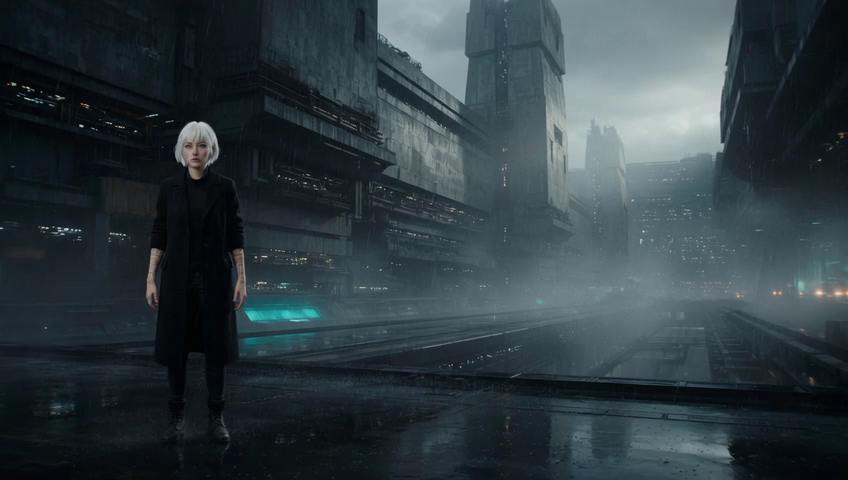
Pan Shot cinematic example

A horizontal rotation of the camera on a fixed axis, sweeping left or right to reveal the breadth of a space, follow lateral movement, or connect subjects across a scene. John Ford's slow, reverent pans across Monument Valley in "The Searchers" established the landscape as a character. Jean Renoir pioneered fluid panning in "The Rules of the Game," and Paul Thomas Anderson uses methodical lateral pans in "There Will Be Blood" to survey the oil fields with the deliberate gaze of a prospector scanning for fortune.

By Ivan Flugelman · Reviewed 16 July 2026

Prompt template

Slow panoramic pan revealing [Subject], the camera rotating smoothly on a fluid head, the steady horizontal sweep connecting a wide expanse of visual information, shot on 35mm anamorphic with Panavision E-series glass, the ultra-wide field of view compressing the panorama into a layered ribbon of texture, cool teal shadows against warm highlight tones

Replace [Subject] with your own character or scene. The prompt is technology-agnostic and works as a starting point for AI image or video generators.

When to use Pan Shot

Use a pan when attention must travel horizontally without relocating the camera. It can follow a person crossing frame, reveal a landscape, connect two subjects, or uncover new information waiting offscreen. The move creates a relationship between its starting and ending points, so both should matter. Avoid panning simply because the frame feels static; motivated rotation is clearer and more persuasive than decorative scanning.

Directing the AI

Fix the camera on one axis and describe a smooth left-to-right or right-to-left rotation. Name the opening subject, the visual path through the middle, and the exact endpoint that resolves the move. Use a fluid, measured speed with enough motion blur to feel continuous but not smeared. A wide anamorphic field can layer the panorama. Keep camera height and tilt unchanged, distinguishing rotation from a dolly, orbit, or handheld drift.

Common mistakes

  1. Failing to specify the start and end subjects, leaving the horizontal move without narrative direction or payoff.
  2. Combining a pan with forward travel and vertical drift until the motion no longer reads as fixed-axis rotation.
  3. Moving too quickly for the audience to inspect the landscape or understand the relationship being revealed.
Sources and further reading

  1. 50+ Types of Camera Shots, Angles, and Techniques — StudioBinder
  2. Types of Camera Movements in Film Explained — StudioBinder

A technique is one decision. A world is the system.

Where the camera stands is not a setting, it is an argument about who has power and how large the world is.

Read Composition in full, free, or start with the thirteen fundamentals for building consistent characters, environments, visual logic, and stories that expand beyond one beautiful frame. There is also World Building Codex 3.0, free, and the World Building Academy.

Related techniques

Whip Pan

An extremely fast horizontal pan that creates motion blur, used as a dynamic transition or to convey sudden surprise, rapid shifts of attention, or frenetic energy. Edgar Wright made the whip pan his comedic signature in "Shaun of the Dead," "Hot Fuzz," and "Baby Driver," using them as rapid-fire visual punchlines. Sam Raimi employed frantic whip pans in the "Evil Dead" trilogy to convey demonic energy, and Damien Chazelle used precise whip pans in "Whiplash" to match the violent tempo of jazz drumming. Paul Thomas Anderson uses them as elegant transitions between scenes in "Boogie Nights."

Tilt Shot

A vertical rotation of the camera on a fixed axis, tilting up or down to reveal height, scan a character from feet to face, or follow vertical action. Hitchcock used the slow tilt masterfully in "Psycho," tilting up the facade of the Bates house to establish its Gothic menace. Spielberg opens "Jurassic Park" with a slow tilt up the Brachiosaurus that mirrors the characters' awe, and Christopher Nolan employs precise tilts in "Inception" to disorient the viewer as architecture folds upon itself.

Tracking Shot

The camera moves alongside, behind, or in front of a moving subject, maintaining a consistent spatial relationship to create a sense of journey, pursuit, or accompaniment. Jean-Luc Godard's famous lateral tracking shot in "Weekend" follows a traffic jam for nearly ten unbroken minutes. Andrei Tarkovsky's tracking shots in "Stalker" move with hypnotic slowness through the Zone, while Alfonso Cuarón and cinematographer Emmanuel Lubezki perfected the extended tracking shot in "Children of Men," where the camera follows characters through chaotic war zones without cutting for minutes at a time.

Aerial Shot

A shot captured from high above the ground, typically using a drone or helicopter, providing a sweeping view of landscapes, cityscapes, or large-scale action. The aerial perspective conveys omniscience, freedom, or the terrifying scale of nature. David Lean pioneered epic aerial work in "Lawrence of Arabia," while Ridley Scott used helicopter shots to establish the grandeur of ancient Rome in "Gladiator." More recently, Denis Villeneuve employed haunting aerial compositions in "Sicario" to reveal the eerie geometry of border landscapes.

Bird's Eye View

A shot taken from directly overhead, looking straight down on the subject, creating a god-like perspective that can make subjects appear small and insignificant or reveal patterns invisible from ground level. Busby Berkeley pioneered the technique in 1930s musicals, choreographing dancers into kaleidoscopic geometric formations seen from directly above. Darren Aronofsky used it extensively in "Requiem for a Dream" to convey psychological detachment, and Wes Anderson frequently employs overhead shots of meticulously arranged objects as a signature compositional device.

Close-Up

A tightly framed shot that fills the screen with a subject's face or a specific detail, revealing emotions, textures, and subtle details invisible in wider shots. Carl Theodor Dreyer's "The Passion of Joan of Arc" (1928) is built almost entirely from devastating close-ups of Renée Falconetti's face, widely considered the greatest performance ever captured on film. Sergio Leone elevated the close-up to operatic intensity in his Westerns, while Jonathan Demme's direct-to-camera close-ups in "The Silence of the Lambs" created unbearable intimacy with Hannibal Lecter.

Dutch Angle

A shot where the camera is tilted on its roll axis, creating a diagonal horizon line to convey unease, disorientation, tension, or a character's disturbed psychological state. Carol Reed made the Dutch angle iconic in "The Third Man" (1949), tilting nearly every frame in the Vienna sewers to mirror the moral corruption of Harry Lime. Tim Burton adopted it as a signature style in "Batman" and "Edward Scissorhands," while Kenneth Branagh used it relentlessly in "Thor" to evoke the comic-book panels of Jack Kirby.

Dolly Shot

A smooth camera movement where the entire camera physically moves toward, away from, or alongside the subject on a wheeled platform or track, creating an immersive sense of movement through space. Orson Welles used dolly shots to navigate the deep-focus interiors of "Citizen Kane," while Spike Lee invented his signature double-dolly shot — mounting both actor and camera on the same platform — to create a floating, surreal glide seen in "Do the Right Thing" and "25th Hour." Martin Scorsese's famous Copacabana shot in "Goodfellas" tracks Henry Hill through the back entrance of a nightclub in one fluid dolly movement.

Establishing Shot

A wide shot typically used at the beginning of a scene to set the context, showing the location, time of day, and spatial relationships before cutting to closer action. Stanley Kubrick's establishing shots in "The Shining" — the Overlook Hotel dwarfed by mountains — immediately communicated isolation and foreboding. Ridley Scott's opening of "Blade Runner" established a dystopian Los Angeles with a single, unforgettable wide shot of industrial hellscape. David Fincher meticulously crafts establishing shots that embed narrative information into every architectural detail.