← Cinematique Visual Effects & Promptable FX · Basic

Film Grain Prompt for AI Image & Video

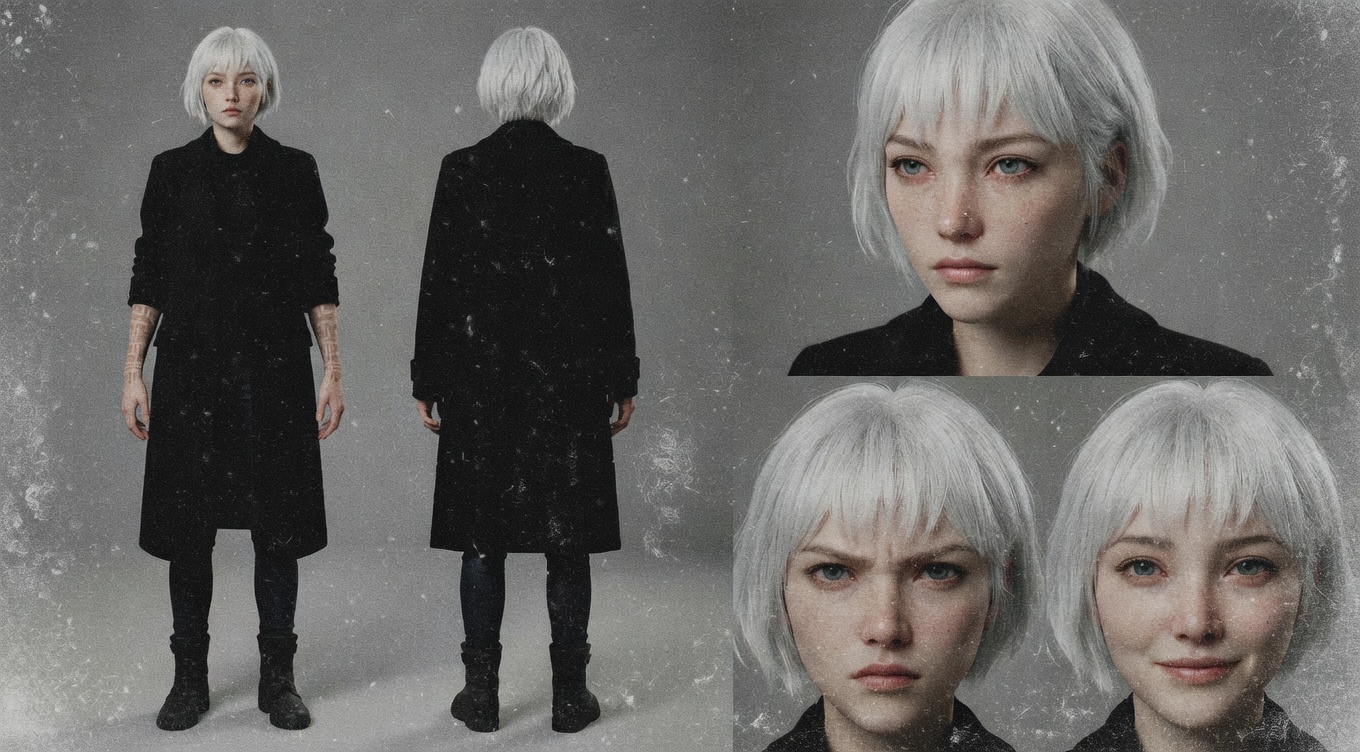
Film Grain cinematic example

The visible texture of chemical film stock — random variations in density and color that give analog footage its organic, tactile character, often added digitally for warmth and nostalgia. Christopher Nolan and Quentin Tarantino remain committed to shooting on actual film stock, preserving the authentic grain of celluloid. Steven Soderbergh shot "Traffic" on different film stocks to differentiate storylines. Modern digital films frequently add film grain in post-production — David Fincher, despite shooting digitally, adds carefully calibrated grain to every frame. The resurgence of film grain aesthetics in photography and video reflects a cultural desire for the organic imperfection that digital capture eliminates.

By Ivan Flugelman · Reviewed 16 July 2026

Prompt template

Heavy film grain visible on [Subject], the organic random texture of high-speed 35mm film stock pushed two stops in processing, each frame alive with dancing silver halide crystals, the grain coarser in shadows and finer in highlights, Kodak Vision3 500T texture that Tarantino and Nolan insist on preserving, the organic soul of celluloid in an increasingly digital world

Replace [Subject] with your own character or scene. The prompt is technology-agnostic and works as a starting point for AI image or video generators.

When to use Film Grain

Use film grain when pristine digital surfaces feel too sterile for the story, or when a period, documentary, intimate, or nostalgic mood benefits from tactile imperfection. Grain can unify composited elements and give shadows physical texture. Choose its strength to match the scene’s light and emotional register. Heavy grain suits low light or pushed material; delicate daylight scenes usually need a finer structure.

Directing the AI

Apply random, frame-varying texture across the image, with coarser grain in deep shadows and finer grain in exposed highlights. Let color density fluctuate subtly without crawling around edges or changing object shapes. Preserve facial features and text readability beneath the texture. Keep grain scale consistent with the apparent format and shot size. In motion, every frame should carry a fresh pattern so the surface feels alive rather than like a static overlay.

Common mistakes

  1. Using a fixed noise layer across every frame, making the grain look pinned to the screen.
  2. Applying equal grain density to highlights and shadows, which removes the exposure-responsive character of film texture.
  3. Choosing particles so large that fine facial features and material detail become difficult to read.

Sources and further reading

  1. Inventing Worlds and Characters: Effects — Academy Museum
  2. Stories of Cinema — Academy Museum

A technique is one decision. A world is the system.

Fog, smoke, dust and haze are not effects. They are the layer that decides how far you can see, and therefore how large the world is.
Read Atmosphere in full, free, or start with the thirteen fundamentals for building consistent characters, environments, visual logic, and stories that expand beyond one beautiful frame. There is also World Building Codex 3.0, free, and the World Building Academy.

Related techniques

Sepia Tone

A warm brownish-yellow color treatment that evokes aged photographs and historical periods, instantly signaling "the past" and adding a romantic, weathered quality. The sepia effect mimics the actual chemical toning process used on photographs from the 1860s through the early 1900s. The Coen Brothers used a digital sepia grade throughout "O Brother, Where Art Thou?" to evoke Depression-era America. Spielberg used sepia-tinted bookend sequences in "Saving Private Ryan." Jean-Pierre Jeunet's "A Very Long Engagement" and Baz Luhrmann's period films use warm sepia tones to romanticize historical settings. The technique has become visual shorthand for memory and nostalgia.

Desaturation

Reducing color intensity in the image, moving toward grayscale to create a bleak, documentary, or dreamlike quality — partial desaturation can isolate a single color for dramatic effect. Steven Spielberg used near-total desaturation in "Schindler's List" with the famous exception of the girl's red coat, creating one of cinema's most iconic selective-color moments. Ridley Scott desaturated "Black Hawk Down" for combat realism. "Sin City" by Robert Rodriguez uses radical desaturation with selective color to recreate Frank Miller's graphic novels. Janusz Kamiński's desaturated look for "Saving Private Ryan" established the visual template for modern war films.

Cinéma Vérité

A documentary approach using handheld cameras, natural lighting, and unscripted moments to capture truth — the camera is acknowledged as present, truth provoked rather than merely observed. Jean Rouch and Edgar Morin coined the term with "Chronicle of a Summer" (1961), where the filmmakers actively engage with their subjects. The American equivalent, "direct cinema" (Frederick Wiseman, the Maysles Brothers), takes a more observational approach. The Dardenne Brothers' fiction films apply cinéma vérité techniques to narrative cinema. Paul Greengrass brings cinéma vérité energy to mainstream thrillers like "United 93" and the "Bourne" trilogy, making Hollywood action feel like documentary.

Color Grading

The process of altering and enhancing color in post-production to create a specific mood, era, or visual identity — the final paintbrush of cinema, transforming raw footage into visual art. The Coen Brothers' "O Brother, Where Art Thou?" (2000) was the first major film to be entirely digitally color graded, creating its sepia-toned Depression-era look. David Fincher works obsessively with colorist Stephen Nakamura to achieve the sickly green-yellow palette of "Se7en" and the cold precision of "Zodiac." Steven Soderbergh used radical color grading in "Traffic" — amber for Mexico, blue for the US, natural for Ohio — as a narrative device. Modern colorists like Company 3's Stefan Sonnenfeld and Technicolor's Peter Doyle are as essential to a film's look as the cinematographer.

Bokeh

The aesthetic quality of out-of-focus areas, particularly light sources that become soft, circular orbs — beautiful bokeh creates a dreamy, luminous background that elevates any subject. The term comes from the Japanese word for "blur," and the quality of bokeh varies dramatically between lens designs. Anamorphic lenses produce distinctive oval bokeh, seen in J.J. Abrams' "Star Trek" and Ridley Scott's "Blade Runner." Wong Kar-wai and Christopher Doyle exploit bokeh as a primary aesthetic element in "In the Mood for Love." The rise of large-sensor cameras has made cinematic bokeh accessible to independent filmmakers, and the distinctive bokeh of vintage lenses has driven a renaissance in legacy glass from Helios, Canon K35, and Cooke Speed Panchro.

Forced Perspective

Using the relationship between camera position and object placement to create optical illusions of size — Hobbits appear small next to Gandalf through precise staging rather than CGI. Peter Jackson used forced perspective extensively in "The Lord of the Rings," building oversized and undersized duplicate sets and using precise camera alignment to make Elijah Wood appear four feet shorter than Ian McKellen in the same frame. Jean-Pierre Jeunet used forced perspective for whimsical effect in "Amélie." The technique dates back to the earliest days of cinema and architecture — Egyptian temples and Baroque churches used the same principle to appear larger than they are.

Lens Distortion

Optical aberrations from specific lenses that bend, stretch, or warp the image — wide-angle barrel distortion, anamorphic oval bokeh, or vintage lens flaring — each lens has a personality. Emmanuel Lubezki exploits wide-angle distortion in his work with Terrence Malick, using ultra-wide lenses that bend the edges of reality. Roger Deakins prefers Arri/Zeiss Master Primes for their clinical precision, while Robert Richardson often chooses older, imperfect glass for its character. The anamorphic distortion of Panavision C-series and E-series lenses — their signature flares, edge softness, and oval bokeh — has become synonymous with the "cinematic look." Modern lens designers at Cooke, Arri, and Zeiss carefully engineer specific amounts of controlled aberration.

Morphing / Dissolve Effect

A digital transformation effect where one form smoothly dissolves, transmutes, or reshapes into another — character dissolving into particles, liquid metal transformation, ethereal dissolution, matter transmutation. Originally pioneered by ILM for the T-1000 in "Terminator 2," morphing has evolved from face-to-face blending into a rich vocabulary of transformation effects. In AI image and video generation, morphing and dissolve effects are among the most promptable visual transformations, allowing creators to depict characters dissolving into elements, reforming from abstract matter, or undergoing surreal metamorphosis.