← Cinematique Lighting · Intermediate

Eye Light Prompt for AI Image & Video

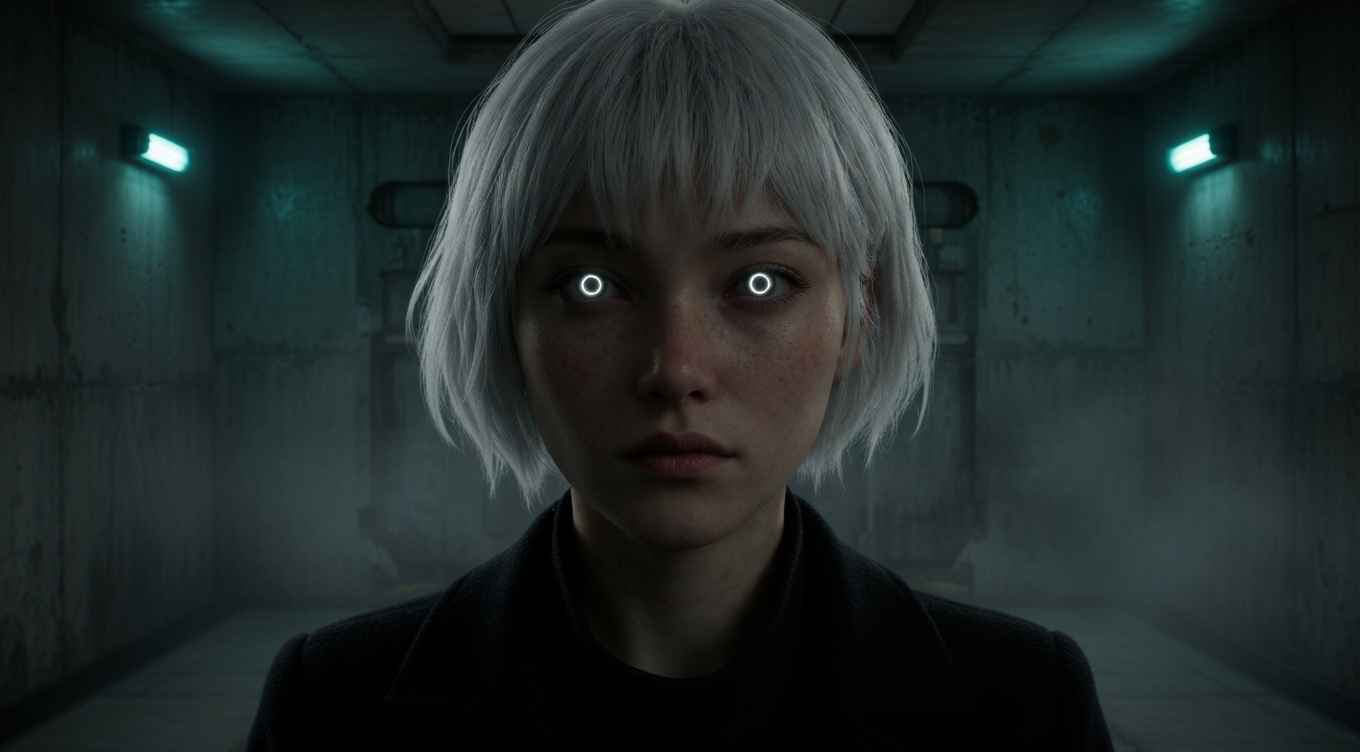
Eye Light cinematic example

A small, dedicated light source positioned to create a catchlight — a bright reflection in the subject's eyes — that brings eyes to life and creates a vital connection with the viewer. The eye light has been an essential tool since Hollywood's Golden Age, when cinematographers like Lee Garmes used tiny "inky" lights to add sparkle to Marlene Dietrich's eyes. Eyes without catchlights appear dead on screen — a fact horror filmmakers exploit deliberately. Steven Spielberg's cinematographers are known for precise eye lights; Janusz Kamiński's eye lights in "Schindler's List" are often the only bright element in otherwise dark compositions.

By Ivan Flugelman · Reviewed 16 July 2026

Prompt template

Eye light close-up of [Subject] with brilliant catchlights sparkling in the irises, a dedicated small source just above the camera creating twin points of reflected light that bring the entire face to life, the subtle difference between eyes with and without this light is the difference between a living portrait and a death mask, shot in close-up on a 100mm macro lens at T2.8, warm golden skin tones, the tiny technical detail that separates professional cinematography from amateur work

Replace [Subject] with your own character or scene. The prompt is technology-agnostic and works as a starting point for AI image or video generators.

When to use Eye Light

Eye light matters in close portraits where the audience must connect with a character's gaze. Use it when the broader lighting leaves the eyes dull, dark, or emotionally absent, especially in dramatic close-ups and reaction shots. A small catchlight can restore presence without changing the rest of the face. Remove it deliberately only when lifelessness, concealment, or horror is the point; otherwise the missing reflection can make a technically sound portrait feel strangely dead.

Directing the AI

Place a small dedicated source just above and near the camera axis. Ask for compact, matching catchlights in both visible irises, positioned consistently with the source and shaped by its aperture. Keep the reflections bright but not larger than the pupils, and preserve natural iris texture around them. The eye light should not lift the entire face. For video, lock the reflections to the curved eyes as the head turns; they should shift subtly, never float or remain fixed in screen space.

Common mistakes

  1. Making catchlights huge or perfectly decorative, so the eyes resemble glossy illustrations rather than reflections from a small source.
  2. Placing different catchlight shapes or directions in each eye, breaking the shared geometry of the lighting setup.
  3. Brightening the entire face to create eye sparkle, which changes the scene instead of adding one precise reflection.
Sources and further reading

  1. Film Lighting — The Ultimate Guide — StudioBinder
  2. Film Lighting Techniques — How to Get a Cinematic Look — StudioBinder

A technique is one decision. A world is the system.

Light is a world rule, not a per-shot decision. What is in the air between the camera and the subject is what makes a place feel inhabited.

Read Atmosphere in full, free, or start with the thirteen fundamentals for building consistent characters, environments, visual logic, and stories that expand beyond one beautiful frame. There is also World Building Codex 3.0, free, and the World Building Academy.

Related techniques

Close-Up

A tightly framed shot that fills the screen with a subject's face or a specific detail, revealing emotions, textures, and subtle details invisible in wider shots. Carl Theodor Dreyer's "The Passion of Joan of Arc" (1928) is built almost entirely from devastating close-ups of Renée Falconetti's face, widely considered the greatest performance ever captured on film. Sergio Leone elevated the close-up to operatic intensity in his Westerns, while Jonathan Demme's direct-to-camera close-ups in "The Silence of the Lambs" created unbearable intimacy with Hannibal Lecter.

Extreme Close-Up

An intensely tight shot focusing on a very specific detail — an eye, a hand trembling, a drop of sweat — amplifying significance and forcing the viewer into intimate proximity with the subject. Sergio Leone built the climax of "The Good, the Bad and the Ugly" almost entirely from extreme close-ups of eyes during the three-way standoff, creating unbearable tension through the intimacy of a glance. Darren Aronofsky used macro close-ups of dilating pupils and needle punctures in "Requiem for a Dream" to physicalize addiction. David Lynch frequently employs extreme close-ups of mundane objects to reveal the uncanny lurking beneath the ordinary.

Reaction Shot

A cut to a character's facial response to an event, dialogue, or revelation — often more powerful than showing the action itself, as it lets the audience experience the emotional impact. Spielberg understands this deeply: in "Schindler's List," we often see Oskar Schindler's face reacting to horror rather than the horror itself, and the reaction is more devastating. Hitchcock said "the size of the close-up on a reaction shot should be directly proportional to the importance of the information." The Kuleshov Effect proves that the same neutral face takes on entirely different meanings based on what precedes it — making the reaction shot cinema's purest form of emotional manipulation.

Three-Point Lighting

The foundational lighting setup using three sources: a key light as the primary source, a fill light to soften shadows, and a backlight to separate the subject from the background. Developed during Hollywood's Golden Age by cinematographers like James Wong Howe and Gregg Toland, three-point lighting became the grammar of classical Hollywood cinema. It defined the glamorous look of stars from Garbo to Monroe and remains the starting point for all narrative lighting. Modern cinematographers like Roger Deakins and Janusz Kamiński build upon and deconstruct this foundation in every film they shoot.

Key Light

The primary and brightest light source in a scene, whose position, intensity, and quality define the overall mood and establish the dominant direction of light and shadow. Gordon Willis, "the Prince of Darkness," used deliberately underexposed key lights in "The Godfather" to create the shadowy world of the Corleone family. Vittorio Storaro sculpted light as pure emotion in "Apocalypse Now" and "Last Tango in Paris." The placement and quality of the key light is the single most important creative decision in any lighting setup, shaping everything from film noir's harsh side-key to Lubezki's soft naturalistic sources.

High-Key Lighting

A bright, even lighting style with minimal shadows that creates an optimistic, clean, or ethereal atmosphere, common in comedies, commercials, and dream sequences. The classic Hollywood musical relied on high-key lighting — Vincente Minnelli's "An American in Paris" and "The Band Wagon" glow with uniform brightness. Kubrick used clinical high-key lighting in the space station sequences of "2001" to create sterile futurism, and Sofia Coppola bathes "Marie Antoinette" in high-key pastel light to capture the candy-colored excess of Versailles. The technique is also fundamental to the visual language of romantic comedies from Nora Ephron to Nancy Meyers.

Low-Key Lighting

A dramatic lighting style dominated by deep shadows and high contrast where only select areas are illuminated, creating mystery, tension, and a noir-like atmosphere. John Alton literally wrote the book — "Painting with Light" — and defined low-key noir cinematography in films like "The Big Combo" and "T-Men." Gordon Willis pushed low-key to its extreme in "The Godfather," with Marlon Brando's eyes often invisible in shadow. Bradford Young's low-key work in "Arrival" and "Selma" brought a moody, naturalistic darkness to modern cinema, and Robert Richardson uses low-key lighting in Tarantino's "The Hateful Eight" to make a single-room Western feel like a horror film.

Chiaroscuro

An extreme contrast between light and dark, inspired by Renaissance painting, creating deeply sculpted, painterly images with rich shadows and selective illumination. Directly descended from Caravaggio's revolutionary use of tenebrism in paintings like "The Calling of Saint Matthew," chiaroscuro entered cinema through German Expressionism and was perfected by Gordon Willis in "The Godfather" — his overhead toplight leaving Brando's eye sockets in impenetrable shadow became one of the most imitated looks in film history. Vittorio Storaro brought painterly chiaroscuro to "Apocalypse Now," and Barry Jenkins' cinematographer James Laxton uses it to sculpt Black skin with luminous beauty in "Moonlight."

Rembrandt Lighting

Named after the Dutch painter — light positioned to create a small triangle of light on the shadow side of the face, a classic portrait technique conveying depth and character. Rembrandt van Rijn developed this lighting naturally in his self-portraits, and Hollywood cinematographers adopted it as the gold standard for dramatic portraiture. Sven Nykvist, Ingmar Bergman's longtime cinematographer, used Rembrandt lighting extensively in "Fanny and Alexander" and "Cries and Whispers." Conrad Hall employed it throughout "Road to Perdition," and it remains the go-to lighting pattern for dramatic headshots and interview setups worldwide.