← Cinematique Lighting · Intermediate

Rembrandt Lighting Prompt for AI Image & Video

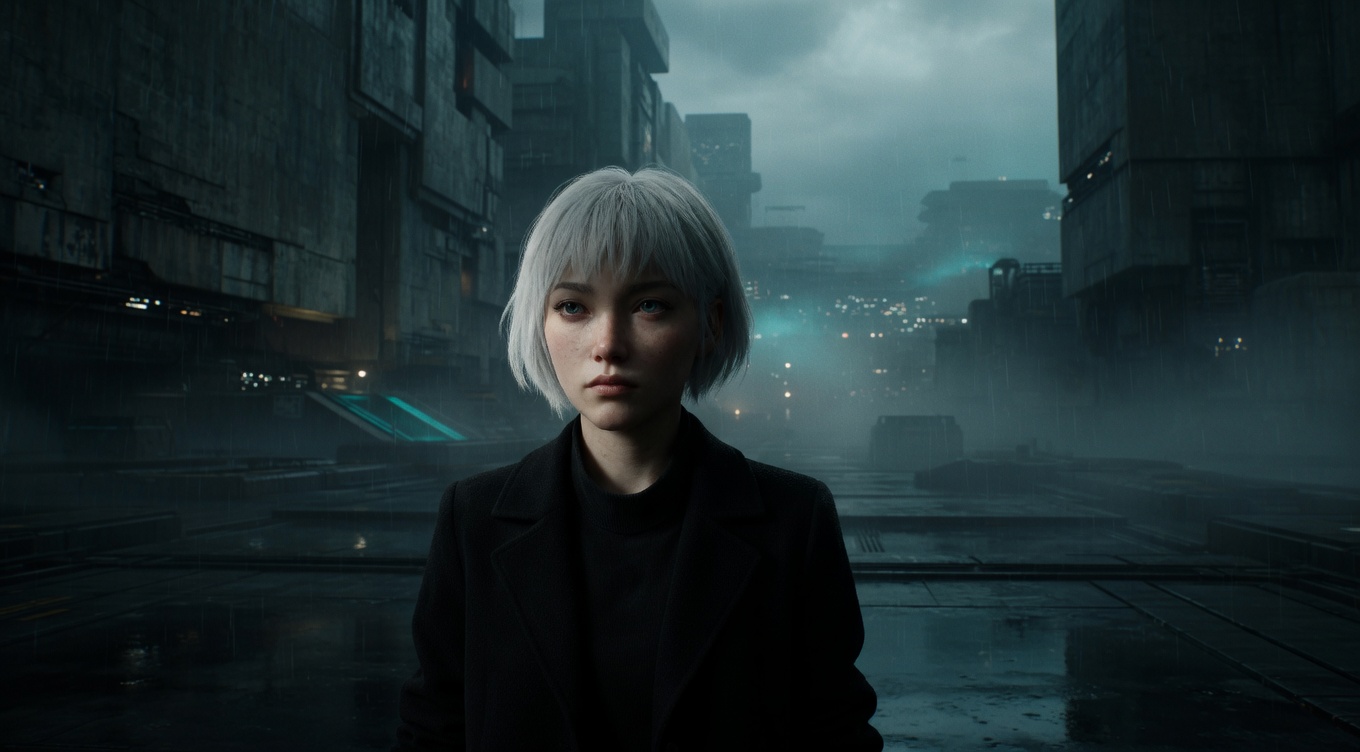
Rembrandt Lighting cinematic example

Named after the Dutch painter — light positioned to create a small triangle of light on the shadow side of the face, a classic portrait technique conveying depth and character. Rembrandt van Rijn developed this lighting naturally in his self-portraits, and Hollywood cinematographers adopted it as the gold standard for dramatic portraiture. Sven Nykvist, Ingmar Bergman's longtime cinematographer, used Rembrandt lighting extensively in "Fanny and Alexander" and "Cries and Whispers." Conrad Hall employed it throughout "Road to Perdition," and it remains the go-to lighting pattern for dramatic headshots and interview setups worldwide.

By Ivan Flugelman · Reviewed 16 July 2026

Prompt template

Rembrandt lighting portrait of [Subject], the key light positioned high and at 45 degrees creating the signature triangle of light on the shadow-side cheek, warm amber tones on the illuminated side transitioning to rich umber shadow on the other, shot on a 105mm portrait lens at f/2, the painterly quality that made Rembrandt's work immortal translated to photographic light

Replace [Subject] with your own character or scene. The prompt is technology-agnostic and works as a starting point for AI image or video generators.

When to use Rembrandt Lighting

Use Rembrandt lighting when a portrait needs dimensionality, restraint, and psychological weight. The small triangle of light on the shadow-side cheek keeps the face readable while preserving contrast, making the pattern useful for character portraits, interrogations, period scenes, and intimate dramatic close-ups.

Directing the AI

Name the pattern, then describe the mechanism: one key light about 45 degrees to the side and above eye level, the nose shadow connecting toward the cheek, and a small inverted triangle beneath the shadow-side eye. Control fill separately. Without those physical cues, models often return generic split lighting or a vague “painterly” portrait.

Common mistakes

  1. Calling any half-lit face Rembrandt lighting without the defining triangle on the shadow-side cheek.
  2. Adding several equal-strength key lights that erase the directional pattern.
  3. Using “Rembrandt,” “soft beauty light,” “flat lighting,” and “high key” together without resolving the contradiction.
Sources and further reading

  1. What Is Rembrandt Lighting and How To Use It — Format
  2. Rembrandt: life and works — The National Gallery

A technique is one decision. A world is the system.

Light is a world rule, not a per-shot decision. What is in the air between the camera and the subject is what makes a place feel inhabited.

Read Atmosphere in full, free, or start with the thirteen fundamentals for building consistent characters, environments, visual logic, and stories that expand beyond one beautiful frame. There is also World Building Codex 3.0, free, and the World Building Academy.

Related techniques

Close-Up

A tightly framed shot that fills the screen with a subject's face or a specific detail, revealing emotions, textures, and subtle details invisible in wider shots. Carl Theodor Dreyer's "The Passion of Joan of Arc" (1928) is built almost entirely from devastating close-ups of Renée Falconetti's face, widely considered the greatest performance ever captured on film. Sergio Leone elevated the close-up to operatic intensity in his Westerns, while Jonathan Demme's direct-to-camera close-ups in "The Silence of the Lambs" created unbearable intimacy with Hannibal Lecter.

Dutch Angle

A shot where the camera is tilted on its roll axis, creating a diagonal horizon line to convey unease, disorientation, tension, or a character's disturbed psychological state. Carol Reed made the Dutch angle iconic in "The Third Man" (1949), tilting nearly every frame in the Vienna sewers to mirror the moral corruption of Harry Lime. Tim Burton adopted it as a signature style in "Batman" and "Edward Scissorhands," while Kenneth Branagh used it relentlessly in "Thor" to evoke the comic-book panels of Jack Kirby.

Dolly Shot

A smooth camera movement where the entire camera physically moves toward, away from, or alongside the subject on a wheeled platform or track, creating an immersive sense of movement through space. Orson Welles used dolly shots to navigate the deep-focus interiors of "Citizen Kane," while Spike Lee invented his signature double-dolly shot — mounting both actor and camera on the same platform — to create a floating, surreal glide seen in "Do the Right Thing" and "25th Hour." Martin Scorsese's famous Copacabana shot in "Goodfellas" tracks Henry Hill through the back entrance of a nightclub in one fluid dolly movement.

Three-Point Lighting

The foundational lighting setup using three sources: a key light as the primary source, a fill light to soften shadows, and a backlight to separate the subject from the background. Developed during Hollywood's Golden Age by cinematographers like James Wong Howe and Gregg Toland, three-point lighting became the grammar of classical Hollywood cinema. It defined the glamorous look of stars from Garbo to Monroe and remains the starting point for all narrative lighting. Modern cinematographers like Roger Deakins and Janusz Kamiński build upon and deconstruct this foundation in every film they shoot.

Key Light

The primary and brightest light source in a scene, whose position, intensity, and quality define the overall mood and establish the dominant direction of light and shadow. Gordon Willis, "the Prince of Darkness," used deliberately underexposed key lights in "The Godfather" to create the shadowy world of the Corleone family. Vittorio Storaro sculpted light as pure emotion in "Apocalypse Now" and "Last Tango in Paris." The placement and quality of the key light is the single most important creative decision in any lighting setup, shaping everything from film noir's harsh side-key to Lubezki's soft naturalistic sources.

High-Key Lighting

A bright, even lighting style with minimal shadows that creates an optimistic, clean, or ethereal atmosphere, common in comedies, commercials, and dream sequences. The classic Hollywood musical relied on high-key lighting — Vincente Minnelli's "An American in Paris" and "The Band Wagon" glow with uniform brightness. Kubrick used clinical high-key lighting in the space station sequences of "2001" to create sterile futurism, and Sofia Coppola bathes "Marie Antoinette" in high-key pastel light to capture the candy-colored excess of Versailles. The technique is also fundamental to the visual language of romantic comedies from Nora Ephron to Nancy Meyers.

Low-Key Lighting

A dramatic lighting style dominated by deep shadows and high contrast where only select areas are illuminated, creating mystery, tension, and a noir-like atmosphere. John Alton literally wrote the book — "Painting with Light" — and defined low-key noir cinematography in films like "The Big Combo" and "T-Men." Gordon Willis pushed low-key to its extreme in "The Godfather," with Marlon Brando's eyes often invisible in shadow. Bradford Young's low-key work in "Arrival" and "Selma" brought a moody, naturalistic darkness to modern cinema, and Robert Richardson uses low-key lighting in Tarantino's "The Hateful Eight" to make a single-room Western feel like a horror film.

Chiaroscuro

An extreme contrast between light and dark, inspired by Renaissance painting, creating deeply sculpted, painterly images with rich shadows and selective illumination. Directly descended from Caravaggio's revolutionary use of tenebrism in paintings like "The Calling of Saint Matthew," chiaroscuro entered cinema through German Expressionism and was perfected by Gordon Willis in "The Godfather" — his overhead toplight leaving Brando's eye sockets in impenetrable shadow became one of the most imitated looks in film history. Vittorio Storaro brought painterly chiaroscuro to "Apocalypse Now," and Barry Jenkins' cinematographer James Laxton uses it to sculpt Black skin with luminous beauty in "Moonlight."

Silhouette

Subject appears as a dark shape against a bright background, with all surface detail eliminated, reducing characters to pure form and creating iconic, mythic, or anonymous images. David Lean created one of cinema's most recognizable silhouettes with Peter O'Toole against the desert sun in "Lawrence of Arabia." Steven Spielberg's E.T. bicycle silhouette against the moon became one of the most iconic images in film history. Terrence Malick uses human silhouettes against twilight skies throughout "The Thin Red Line" and "Days of Heaven" to reduce characters to archetypal figures against an indifferent natural world.