← Cinematique Camera Work · Basic

Extreme Close-Up Prompt for AI Image & Video

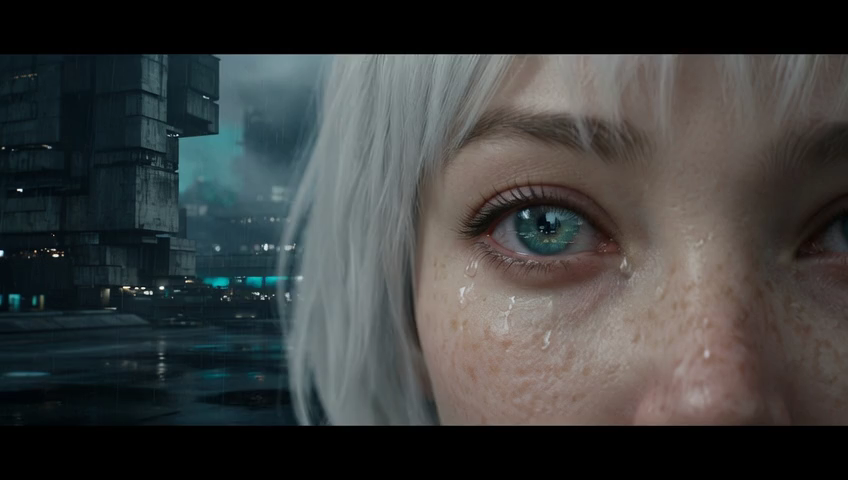
Extreme Close-Up cinematic example

An intensely tight shot focusing on a very specific detail — an eye, a hand trembling, a drop of sweat — amplifying significance and forcing the viewer into intimate proximity with the subject. Sergio Leone built the climax of "The Good, the Bad and the Ugly" almost entirely from extreme close-ups of eyes during the three-way standoff, creating unbearable tension through the intimacy of a glance. Darren Aronofsky used macro close-ups of dilating pupils and needle punctures in "Requiem for a Dream" to physicalize addiction. David Lynch frequently employs extreme close-ups of mundane objects to reveal the uncanny lurking beneath the ordinary.

By Ivan Flugelman · Reviewed 16 July 2026

Prompt template

Extreme macro close-up of [Subject] filling the entire frame, every microscopic detail rendered with clinical precision, ring light creating a circular catchlight, razor-thin depth of field at f/2.8 on a 100mm macro lens, Fujifilm Velvia-inspired saturated color science, the forensic intimacy of extreme proximity

Replace [Subject] with your own character or scene. The prompt is technology-agnostic and works as a starting point for AI image or video generators.

When to use Extreme Close-Up

Cut to an extreme close-up when one tiny detail must carry the scene: a pupil changing, a finger tightening, sweat forming, or a needle touching skin. The frame forces attention and turns physical texture into emotion. Use it to intensify suspense, reveal evidence, or make an ordinary object uncanny. Its power drops quickly when every beat receives the same microscopic treatment.

Directing the AI

Name the exact fragment that fills the frame and exclude the wider face or body. Ask for macro-scale detail, a 100mm macro perspective, razor-thin depth of field, and one precise focus plane. A circular catchlight or controlled ring light can reveal surface structure without flattening the subject. Keep background information abstract or absent. In video, limit motion to a tremor, blink, bead of moisture, or minute focus adjustment so proximity remains the event.

Common mistakes

  1. Prompting a generic close-up instead of naming the exact eye, fingertip, wound, or object detail that fills frame.
  2. Demanding sharpness everywhere, which removes the selective attention and optical intimacy of true macro framing.
  3. Adding a busy background that reintroduces context and breaks the suffocating proximity of the chosen detail.
Sources and further reading

  1. 50+ Types of Camera Shots, Angles, and Techniques — StudioBinder
  2. Types of Camera Movements in Film Explained — StudioBinder

A technique is one decision. A world is the system.

Where the camera stands is not a setting, it is an argument about who has power and how large the world is.

Read Composition in full, free, or start with the thirteen fundamentals for building consistent characters, environments, visual logic, and stories that expand beyond one beautiful frame. There is also World Building Codex 3.0, free, and the World Building Academy.

Related techniques

Choker Shot

A very tight shot framing the face from forehead to chin, eliminating nearly all background, more claustrophobic than a standard close-up and often used for moments of extreme emotion. Ingmar Bergman used the choker shot relentlessly in "Persona" and "Cries and Whispers," trapping his actors' faces in frames that feel like emotional prisons. Darren Aronofsky adopted this approach in "Black Swan," keeping Natalie Portman's face in suffocating proximity, and Steve McQueen uses sustained choker shots in "Hunger" and "Shame" to force viewers into uncomfortable intimacy with his characters' pain.

Insert Shot

A close-up cut to a specific detail within a scene — a ticking clock, a letter, a weapon being drawn — directing audience attention to a crucial narrative element. Hitchcock was the supreme master of the insert shot, using close-ups of keys, glasses of milk, and scissors in films like "Dial M for Murder" and "Notorious" to build unbearable suspense from ordinary objects. Quentin Tarantino uses stylized insert shots of food, weapons, and car details as a rhythmic signature, while Edgar Wright employs rapid-fire inserts for comedic punctuation in "Shaun of the Dead" and "Hot Fuzz."

Shallow Focus

Using a very narrow depth of field so only the subject is sharp while everything else melts into soft blur, isolating the subject and creating an intimate, dreamy quality. Wong Kar-wai and Christopher Doyle use extremely shallow focus in "In the Mood for Love" and "Chungking Express" to create their signature romantic, ephemeral atmosphere. Terrence Malick's work with Emmanuel Lubezki frequently employs razor-thin focus planes in natural light. The rise of large-sensor digital cameras and fast cine lenses has made shallow focus more accessible than ever, but master cinematographers like Hoyte van Hoytema control it with surgical precision in films like "Her" and "Dunkirk."

Aerial Shot

A shot captured from high above the ground, typically using a drone or helicopter, providing a sweeping view of landscapes, cityscapes, or large-scale action. The aerial perspective conveys omniscience, freedom, or the terrifying scale of nature. David Lean pioneered epic aerial work in "Lawrence of Arabia," while Ridley Scott used helicopter shots to establish the grandeur of ancient Rome in "Gladiator." More recently, Denis Villeneuve employed haunting aerial compositions in "Sicario" to reveal the eerie geometry of border landscapes.

Bird's Eye View

A shot taken from directly overhead, looking straight down on the subject, creating a god-like perspective that can make subjects appear small and insignificant or reveal patterns invisible from ground level. Busby Berkeley pioneered the technique in 1930s musicals, choreographing dancers into kaleidoscopic geometric formations seen from directly above. Darren Aronofsky used it extensively in "Requiem for a Dream" to convey psychological detachment, and Wes Anderson frequently employs overhead shots of meticulously arranged objects as a signature compositional device.

Close-Up

A tightly framed shot that fills the screen with a subject's face or a specific detail, revealing emotions, textures, and subtle details invisible in wider shots. Carl Theodor Dreyer's "The Passion of Joan of Arc" (1928) is built almost entirely from devastating close-ups of Renée Falconetti's face, widely considered the greatest performance ever captured on film. Sergio Leone elevated the close-up to operatic intensity in his Westerns, while Jonathan Demme's direct-to-camera close-ups in "The Silence of the Lambs" created unbearable intimacy with Hannibal Lecter.

Dutch Angle

A shot where the camera is tilted on its roll axis, creating a diagonal horizon line to convey unease, disorientation, tension, or a character's disturbed psychological state. Carol Reed made the Dutch angle iconic in "The Third Man" (1949), tilting nearly every frame in the Vienna sewers to mirror the moral corruption of Harry Lime. Tim Burton adopted it as a signature style in "Batman" and "Edward Scissorhands," while Kenneth Branagh used it relentlessly in "Thor" to evoke the comic-book panels of Jack Kirby.

Dolly Shot

A smooth camera movement where the entire camera physically moves toward, away from, or alongside the subject on a wheeled platform or track, creating an immersive sense of movement through space. Orson Welles used dolly shots to navigate the deep-focus interiors of "Citizen Kane," while Spike Lee invented his signature double-dolly shot — mounting both actor and camera on the same platform — to create a floating, surreal glide seen in "Do the Right Thing" and "25th Hour." Martin Scorsese's famous Copacabana shot in "Goodfellas" tracks Henry Hill through the back entrance of a nightclub in one fluid dolly movement.

Establishing Shot

A wide shot typically used at the beginning of a scene to set the context, showing the location, time of day, and spatial relationships before cutting to closer action. Stanley Kubrick's establishing shots in "The Shining" — the Overlook Hotel dwarfed by mountains — immediately communicated isolation and foreboding. Ridley Scott's opening of "Blade Runner" established a dystopian Los Angeles with a single, unforgettable wide shot of industrial hellscape. David Fincher meticulously crafts establishing shots that embed narrative information into every architectural detail.