← Cinematique Camera Work · Advanced

Vertigo Effect Prompt for AI Image & Video

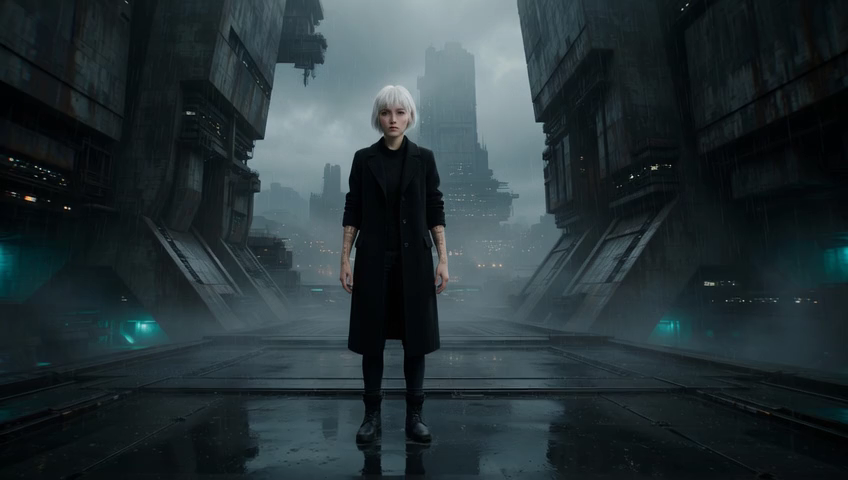
Vertigo Effect cinematic example

Also called a dolly zoom — the camera dollies in while zooming out (or vice versa), causing the background to warp while the subject stays the same size, creating a visceral sense of disorientation. Invented by cameraman Irmin Roberts for Alfred Hitchcock's "Vertigo" (1958) to visualize James Stewart's acrophobia, the technique was later used to devastating effect by Steven Spielberg in "Jaws" — the moment Chief Brody sees the shark attack from the beach. Peter Jackson employed it in "The Lord of the Rings" when Frodo senses the Ringwraiths approaching, and Sam Raimi made it a horror staple in the "Evil Dead" films.

By Ivan Flugelman · Reviewed 16 July 2026

Prompt template

Vertigo effect dolly zoom on [Subject] locked in frame while the background warps and telescopes away in a nauseating spatial contradiction, the zoom and dolly counter-movement perfectly synchronized, desaturated palette with sickly yellow-green undertones, shot on anamorphic glass, Hitchcock's visual language of psychological vertigo made manifest

Replace [Subject] with your own character or scene. The prompt is technology-agnostic and works as a starting point for AI image or video generators.

When to use Vertigo Effect

Deploy the vertigo effect at a moment of shock, dread, realization, or altered perception. The subject stays the same size while the world behind them telescopes, making stable space feel suddenly impossible. It works when psychology and environment must collide in one mechanical move. Because the distortion is conspicuous, use it sparingly and motivate it with a precise emotional turn rather than general unease.

Directing the AI

Lock the subject's size and central position throughout the shot. Move the camera physically inward while zooming outward, or reverse both actions, with perfect counter-synchronization. The foreground face should remain stable as background distance stretches or compresses visibly along strong depth lines. Use a desaturated palette with sickly yellow-green undertones and restrained anamorphic texture. State the move's duration and emotional trigger; do not ask for a normal push-in with incidental lens breathing.

Common mistakes

  1. Allowing the subject to grow during the move, which turns the setup into an ordinary zoom or dolly approach.
  2. Choosing a flat background with no depth lines, leaving little visible space for the contradiction to warp.
  3. Using the effect repeatedly, so a powerful psychological rupture becomes a predictable transition between ordinary shots.
Sources and further reading

  1. 50+ Types of Camera Shots, Angles, and Techniques — StudioBinder
  2. Types of Camera Movements in Film Explained — StudioBinder

A technique is one decision. A world is the system.

Where the camera stands is not a setting, it is an argument about who has power and how large the world is.

Read Composition in full, free, or start with the thirteen fundamentals for building consistent characters, environments, visual logic, and stories that expand beyond one beautiful frame. There is also World Building Codex 3.0, free, and the World Building Academy.

Related techniques

Dolly Shot

A smooth camera movement where the entire camera physically moves toward, away from, or alongside the subject on a wheeled platform or track, creating an immersive sense of movement through space. Orson Welles used dolly shots to navigate the deep-focus interiors of "Citizen Kane," while Spike Lee invented his signature double-dolly shot — mounting both actor and camera on the same platform — to create a floating, surreal glide seen in "Do the Right Thing" and "25th Hour." Martin Scorsese's famous Copacabana shot in "Goodfellas" tracks Henry Hill through the back entrance of a nightclub in one fluid dolly movement.

Push In

A slow, deliberate camera movement toward the subject, physically closing distance to intensify focus and emotional weight, drawing the audience deeper into a moment or realization. Jonathan Demme's slow push-in to Clarice Starling's face during her final conversation with Hannibal Lecter in "Silence of the Lambs" is a masterclass in the technique. Kubrick used glacial push-ins toward Jack Nicholson in "The Shining" to build unbearable psychological pressure, and Paul Thomas Anderson employs the slow push-in as a recurring emotional punctuation mark throughout "There Will Be Blood" and "Phantom Thread."

Lens Distortion

Optical aberrations from specific lenses that bend, stretch, or warp the image — wide-angle barrel distortion, anamorphic oval bokeh, or vintage lens flaring — each lens has a personality. Emmanuel Lubezki exploits wide-angle distortion in his work with Terrence Malick, using ultra-wide lenses that bend the edges of reality. Roger Deakins prefers Arri/Zeiss Master Primes for their clinical precision, while Robert Richardson often chooses older, imperfect glass for its character. The anamorphic distortion of Panavision C-series and E-series lenses — their signature flares, edge softness, and oval bokeh — has become synonymous with the "cinematic look." Modern lens designers at Cooke, Arri, and Zeiss carefully engineer specific amounts of controlled aberration.

Aerial Shot

A shot captured from high above the ground, typically using a drone or helicopter, providing a sweeping view of landscapes, cityscapes, or large-scale action. The aerial perspective conveys omniscience, freedom, or the terrifying scale of nature. David Lean pioneered epic aerial work in "Lawrence of Arabia," while Ridley Scott used helicopter shots to establish the grandeur of ancient Rome in "Gladiator." More recently, Denis Villeneuve employed haunting aerial compositions in "Sicario" to reveal the eerie geometry of border landscapes.

Bird's Eye View

A shot taken from directly overhead, looking straight down on the subject, creating a god-like perspective that can make subjects appear small and insignificant or reveal patterns invisible from ground level. Busby Berkeley pioneered the technique in 1930s musicals, choreographing dancers into kaleidoscopic geometric formations seen from directly above. Darren Aronofsky used it extensively in "Requiem for a Dream" to convey psychological detachment, and Wes Anderson frequently employs overhead shots of meticulously arranged objects as a signature compositional device.

Close-Up

A tightly framed shot that fills the screen with a subject's face or a specific detail, revealing emotions, textures, and subtle details invisible in wider shots. Carl Theodor Dreyer's "The Passion of Joan of Arc" (1928) is built almost entirely from devastating close-ups of Renée Falconetti's face, widely considered the greatest performance ever captured on film. Sergio Leone elevated the close-up to operatic intensity in his Westerns, while Jonathan Demme's direct-to-camera close-ups in "The Silence of the Lambs" created unbearable intimacy with Hannibal Lecter.

Dutch Angle

A shot where the camera is tilted on its roll axis, creating a diagonal horizon line to convey unease, disorientation, tension, or a character's disturbed psychological state. Carol Reed made the Dutch angle iconic in "The Third Man" (1949), tilting nearly every frame in the Vienna sewers to mirror the moral corruption of Harry Lime. Tim Burton adopted it as a signature style in "Batman" and "Edward Scissorhands," while Kenneth Branagh used it relentlessly in "Thor" to evoke the comic-book panels of Jack Kirby.

Establishing Shot

A wide shot typically used at the beginning of a scene to set the context, showing the location, time of day, and spatial relationships before cutting to closer action. Stanley Kubrick's establishing shots in "The Shining" — the Overlook Hotel dwarfed by mountains — immediately communicated isolation and foreboding. Ridley Scott's opening of "Blade Runner" established a dystopian Los Angeles with a single, unforgettable wide shot of industrial hellscape. David Fincher meticulously crafts establishing shots that embed narrative information into every architectural detail.

Extreme Close-Up

An intensely tight shot focusing on a very specific detail — an eye, a hand trembling, a drop of sweat — amplifying significance and forcing the viewer into intimate proximity with the subject. Sergio Leone built the climax of "The Good, the Bad and the Ugly" almost entirely from extreme close-ups of eyes during the three-way standoff, creating unbearable tension through the intimacy of a glance. Darren Aronofsky used macro close-ups of dilating pupils and needle punctures in "Requiem for a Dream" to physicalize addiction. David Lynch frequently employs extreme close-ups of mundane objects to reveal the uncanny lurking beneath the ordinary.