← Cinematique Editing · Intermediate

Time-Lapse Prompt for AI Image & Video

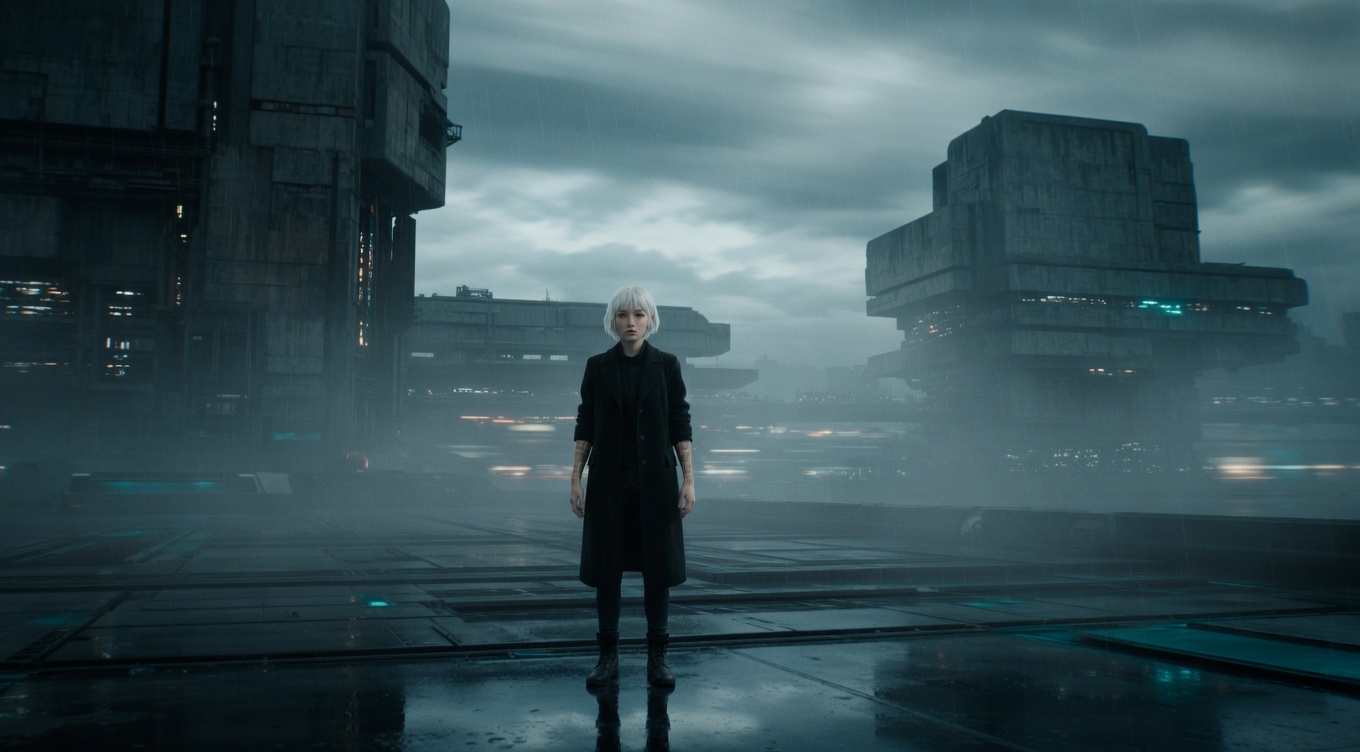
Time-Lapse cinematic example

Capturing frames at intervals much slower than playback speed, compressing hours, days, or months into seconds to reveal processes invisible to normal perception — clouds racing, cities pulsing. Ron Fricke's "Koyaanisqatsi" (with Philip Glass's score) turned time-lapse into transcendent art, showing the rhythms of nature and civilization accelerated into hypnotic visual music. Terrence Malick uses time-lapse in "The Tree of Life" for cosmic creation sequences. David Fincher employed time-lapse in "Fight Club" and "The Curious Case of Benjamin Button" for both practical and poetic purposes. Modern nature documentaries by BBC and National Geographic have elevated time-lapse photography to a science.

By Ivan Flugelman · Reviewed 16 July 2026

Prompt template

Time-lapse of [Subject] compressed from hours into seconds, light cycling through the full spectrum of the day, shadows rotating like sundial hands, the entire rhythm of existence compressed into a single visual breath, shot on a locked-off camera with an intervalometer, the Koyaanisqatsi revelation that accelerating time reveals patterns invisible to human perception

Replace [Subject] with your own character or scene. The prompt is technology-agnostic and works as a starting point for AI image or video generators.

When to use Time-Lapse

Use time-lapse when the story needs to show a process whose scale exceeds ordinary screen time: daylight crossing a room, clouds building, streets filling, or a structure changing. It can bridge hours, mark labor, reveal systems, or turn gradual transformation into visual rhythm. The technique works when change is the subject; it feels empty when nothing meaningful evolves within the locked composition.

Directing the AI

Lock the camera and define a clear start state, end state, and visible process between them. Keep permanent architecture and horizon lines stable while clouds, shadows, traffic, people, or growth accelerate through frame. Describe light cycling across a believable path, with shadows rotating consistently rather than flickering randomly. Maintain one composition throughout. Compress duration aggressively, but preserve enough intermediate stages for the transformation to read as a continuous pattern rather than unrelated snapshots.

Common mistakes

  1. Moving the camera without purpose, which hides the gradual pattern that time compression is meant to reveal.
  2. Accelerating every element equally, making solid buildings wobble or permanent objects mutate with passing time.
  3. Providing no distinct beginning or ending state, so the sequence feels busy without communicating change.
Sources and further reading

  1. What Is Film Editing? — StudioBinder
  2. Types of Editing Transitions in Film — StudioBinder

A technique is one decision. A world is the system.

Generation is cheap and curation is expensive. A world is built as much by what you delete as by what you make.

Read Editing in full, free, or start with the thirteen fundamentals for building consistent characters, environments, visual logic, and stories that expand beyond one beautiful frame. There is also World Building Codex 3.0, free, and the World Building Academy.

Related techniques

Montage

A sequence of short shots edited together to compress time, convey information, or build emotional momentum — from training sequences to falling-in-love sequences, montage is cinema's time machine. Sergei Eisenstein theorized montage as cinema's unique art form in the 1920s, and his Odessa Steps sequence in "Battleship Potemkin" remains the most studied montage in film history. Rocky Balboa's training montage set to "Gonna Fly Now" defined the modern montage for a generation. Martin Scorsese uses montage in "Goodfellas" to compress years of criminal excess into exhilarating minutes, and Edgar Wright creates kinetic comic montages in the Cornetto trilogy.

Slow Motion

Footage captured at a higher frame rate than playback speed, stretching time to reveal details invisible at normal speed and amplifying impact, beauty, or emotional weight of a moment. Sam Peckinpah revolutionized screen violence with the slow-motion bloodbath of "The Wild Bunch," making destruction simultaneously beautiful and horrifying. The Wachowskis' "bullet time" in "The Matrix" became a cultural phenomenon, while Zack Snyder made speed ramping — shifting between slow and normal motion — his signature in "300." Wong Kar-wai uses slow motion with step-printing in "In the Mood for Love" to transform a woman walking past a noodle stand into pure visual poetry.

Static Shot

A completely locked-off shot with no camera movement, forcing the composition to do all the work — the deliberate stillness can create contemplation, comedy through staging, or unsettling tension. Yasujiro Ozu built an entire cinematic philosophy around the static shot, his "pillow shots" of empty rooms and corridors in "Tokyo Story" becoming meditations on impermanence. Wes Anderson's rigorously static, symmetrical compositions in "The Grand Budapest Hotel" turn every frame into a diorama. Roy Andersson constructs elaborate single-frame tableaux vivants in "Songs from the Second Floor," and Chantal Akerman's static shots in "Jeanne Dielman" transform domestic routine into radical cinema.

Cross-Cutting

Alternating between two or more scenes happening simultaneously in different locations, building tension by implying convergence and creating dramatic parallels between storylines. D.W. Griffith pioneered cross-cutting in "Intolerance" (1916), intercutting between four historical periods. Christopher Nolan elevated cross-cutting to structural principle in "Inception" and "Dunkirk," weaving three timelines with different tempos. Francis Ford Coppola's baptism sequence in "The Godfather" — cross-cutting between the church ceremony and the simultaneous murders — remains one of cinema's most powerful uses of the technique.

Jump Cut

A cut between two sequential shots of the same subject from a similar angle, creating a jarring jump in time — once considered a mistake, now used intentionally for energy, anxiety, or time compression. Jean-Luc Godard made the jump cut famous in "Breathless" (1960), using it partly out of necessity to trim a too-long film and partly as a deliberate rejection of smooth Hollywood continuity. The technique became a signature of the French New Wave and has since been adopted by filmmakers from Guy Ritchie to Gus Van Sant. Darren Aronofsky uses rapid-fire jump cuts in "Requiem for a Dream" to convey the fragmented consciousness of addiction.

Dissolve

One image gradually fades out as the next fades in, both visible simultaneously during the transition, suggesting the passage of time, a dream state, or a thematic connection. Ingmar Bergman used dissolves as emotional bridges in "Wild Strawberries," where the overlap between present and memory becomes the film's central visual metaphor. Terrence Malick uses extended dissolves in "The Tree of Life" to blend cosmic and domestic imagery. Stanley Kubrick's dissolve from the star gate sequence to the neoclassical bedroom in "2001" is one of cinema's most disorienting transitions. Wong Kar-wai layers dissolves in "In the Mood for Love" to make time itself feel fluid and unreliable.

Fade In/Out

The image gradually appears from or disappears to black (or white) — fade to black signals an ending or major time passage while fade from black signals a new beginning or chapter. The Coen Brothers use long, slow fades to black as chapter markers in "No Country for Old Men," each fade feeling like a door closing permanently. Kubrick's fade to white at the end of "2001" suggests transcendence. Martin Scorsese uses the fade to black at the end of "Goodfellas" and "The Irishman" with devastating finality. The pace of the fade itself communicates meaning — a quick fade feels like a curtain dropping while a slow fade feels like consciousness dimming.

Smash Cut

An abrupt, jarring cut between two vastly different scenes — often from quiet to loud, calm to chaos, or a character saying "nothing could go wrong" to everything going wrong. Edgar Wright is the modern master of the smash cut, using it for comedic whiplash throughout "Shaun of the Dead" and "Hot Fuzz." Kubrick's smash cut from the bone to the satellite in "2001" is the most dramatic temporal smash cut in cinema. The Coen Brothers use smash cuts for dark comedy in "Fargo" and "No Country for Old Men," and David Lynch uses them in "Mulholland Drive" to shatter the viewer's sense of narrative stability.

Long Take

An extended shot that runs significantly longer than conventional cuts, building real-time tension, showcasing performance, and immersing the viewer in unbroken space and time. Alfonso Cuarón and Emmanuel Lubezki pushed the long take to new extremes in "Children of Men" with the legendary six-minute car ambush, and later in "Gravity" and "Roma." Alejandro González Iñárritu's "Birdman" is constructed as one apparent continuous take. Andrei Tarkovsky's long takes in "Stalker" and "Mirror" unfold with hypnotic patience, while Béla Tarr's "Sátántangó" contains takes lasting over ten minutes. The long take is cinema's way of refusing to blink.