← Cinematique Lighting · Intermediate

Short Lighting Prompt for AI Image & Video

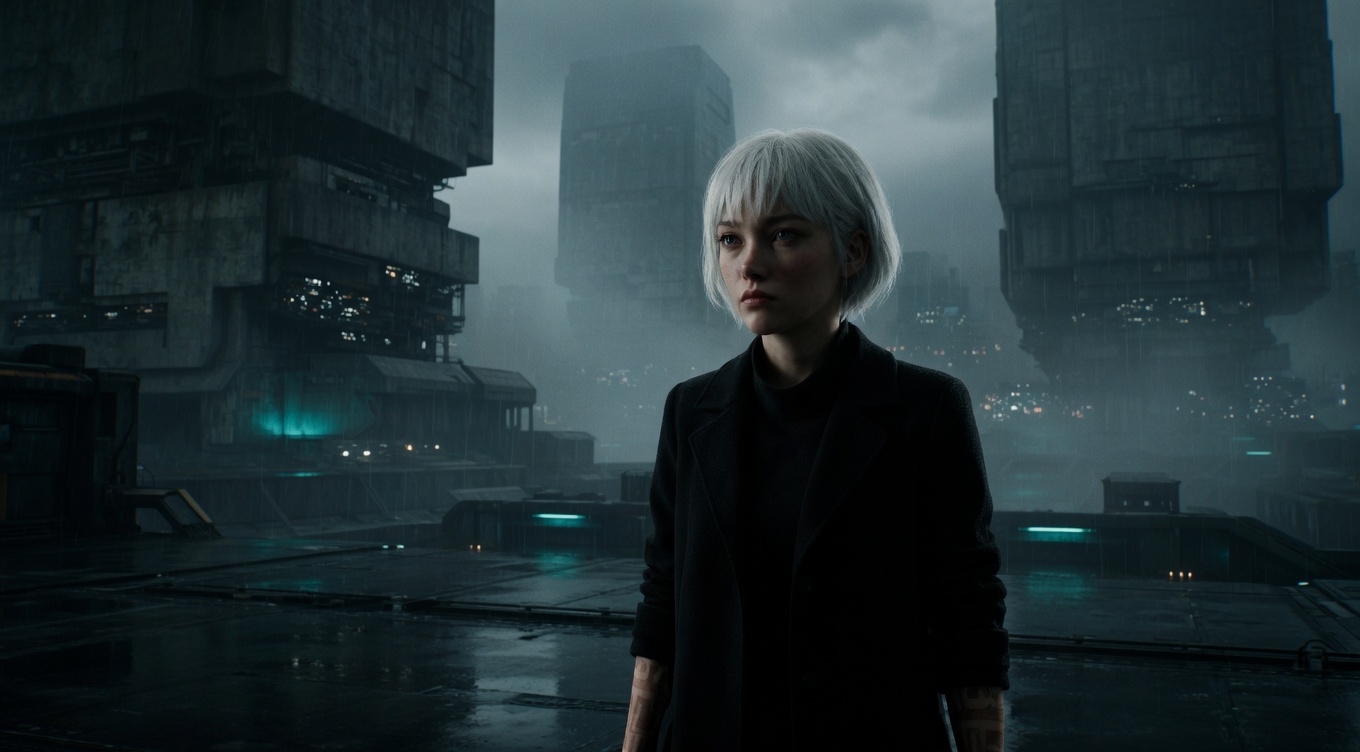
Short Lighting cinematic example

The side of the face turned away from the camera receives the key light, putting the broader visible area in shadow, creating a slimming, more dramatic and moody portrait. Short lighting is preferred for dramatic and thriller genres where mystery and tension serve the story. Gordon Willis frequently used short lighting patterns in his collaborations with Woody Allen and Francis Ford Coppola. Film noir cinematographers defaulted to short lighting to create the shadowy, secretive faces of morally ambiguous characters. Roger Deakins uses short lighting in "Prisoners" to maintain a persistent sense of concealment and dread.

By Ivan Flugelman · Reviewed 16 July 2026

Prompt template

Short lighting on [Subject] with the key hitting the narrow far side, putting the broader camera-facing side in shadow, the small bright area creating an accent surrounded by darkness, shot on a fast 85mm lens at T1.4 with the background falling to black, film noir portrait psychology where what is hidden matters more than what is shown

Replace [Subject] with your own character or scene. The prompt is technology-agnostic and works as a starting point for AI image or video generators.

When to use Short Lighting

Short lighting fits portraits that need mystery, tension, a slimmer face shape, or a sense that the character is withholding information. It works naturally in thrillers, noir, interrogations, and dramatic dialogue. The small far-side highlight becomes an accent surrounded by a larger field of shadow. Use it when concealment carries meaning, but protect enough eye and skin detail to keep the emotion intentional rather than simply underexposed.

Directing the AI

Angle the subject away from camera and place the key on the narrow face plane turned farther from the lens. Keep the broad camera-facing cheek in shadow, with the bright far cheek acting as a controlled accent. Use minimal fill and let the background fall darker if the scene supports it. Preserve a catchlight or slight eye detail where needed. During movement, make the light pattern respond to head rotation instead of remaining frozen across the same facial regions.

Common mistakes

  1. Illuminating the broad near cheek, which reverses the intended pattern and removes the slimming field of shadow.
  2. Crushing the entire camera-facing side to featureless black, losing the controlled detail that keeps the portrait readable.
  3. Letting the narrow highlight spread across the nose and front plane, weakening the concentrated dramatic accent.
Sources and further reading

  1. Film Lighting — The Ultimate Guide — StudioBinder
  2. Film Lighting Techniques — How to Get a Cinematic Look — StudioBinder

A technique is one decision. A world is the system.

Light is a world rule, not a per-shot decision. What is in the air between the camera and the subject is what makes a place feel inhabited.

Read Atmosphere in full, free, or start with the thirteen fundamentals for building consistent characters, environments, visual logic, and stories that expand beyond one beautiful frame. There is also World Building Codex 3.0, free, and the World Building Academy.

Related techniques

Side Lighting

Light striking the subject from a 90-degree angle, illuminating one half while leaving the other in shadow, splitting the face or figure to create strong dimensionality and visual tension. Vittorio Storaro used dramatic side lighting throughout "Apocalypse Now" to bisect characters between light and darkness, mirroring the moral duality at the film's core. Roger Deakins employs precise side lighting in "Prisoners" and "Sicario" to create sculptural depth. The technique is central to Conrad Hall's Oscar-winning cinematography in "American Beauty," where side light from venetian blinds creates the film's signature visual motif.

Low-Key Lighting

A dramatic lighting style dominated by deep shadows and high contrast where only select areas are illuminated, creating mystery, tension, and a noir-like atmosphere. John Alton literally wrote the book — "Painting with Light" — and defined low-key noir cinematography in films like "The Big Combo" and "T-Men." Gordon Willis pushed low-key to its extreme in "The Godfather," with Marlon Brando's eyes often invisible in shadow. Bradford Young's low-key work in "Arrival" and "Selma" brought a moody, naturalistic darkness to modern cinema, and Robert Richardson uses low-key lighting in Tarantino's "The Hateful Eight" to make a single-room Western feel like a horror film.

Rembrandt Lighting

Named after the Dutch painter — light positioned to create a small triangle of light on the shadow side of the face, a classic portrait technique conveying depth and character. Rembrandt van Rijn developed this lighting naturally in his self-portraits, and Hollywood cinematographers adopted it as the gold standard for dramatic portraiture. Sven Nykvist, Ingmar Bergman's longtime cinematographer, used Rembrandt lighting extensively in "Fanny and Alexander" and "Cries and Whispers." Conrad Hall employed it throughout "Road to Perdition," and it remains the go-to lighting pattern for dramatic headshots and interview setups worldwide.

Three-Point Lighting

The foundational lighting setup using three sources: a key light as the primary source, a fill light to soften shadows, and a backlight to separate the subject from the background. Developed during Hollywood's Golden Age by cinematographers like James Wong Howe and Gregg Toland, three-point lighting became the grammar of classical Hollywood cinema. It defined the glamorous look of stars from Garbo to Monroe and remains the starting point for all narrative lighting. Modern cinematographers like Roger Deakins and Janusz Kamiński build upon and deconstruct this foundation in every film they shoot.

Key Light

The primary and brightest light source in a scene, whose position, intensity, and quality define the overall mood and establish the dominant direction of light and shadow. Gordon Willis, "the Prince of Darkness," used deliberately underexposed key lights in "The Godfather" to create the shadowy world of the Corleone family. Vittorio Storaro sculpted light as pure emotion in "Apocalypse Now" and "Last Tango in Paris." The placement and quality of the key light is the single most important creative decision in any lighting setup, shaping everything from film noir's harsh side-key to Lubezki's soft naturalistic sources.

High-Key Lighting

A bright, even lighting style with minimal shadows that creates an optimistic, clean, or ethereal atmosphere, common in comedies, commercials, and dream sequences. The classic Hollywood musical relied on high-key lighting — Vincente Minnelli's "An American in Paris" and "The Band Wagon" glow with uniform brightness. Kubrick used clinical high-key lighting in the space station sequences of "2001" to create sterile futurism, and Sofia Coppola bathes "Marie Antoinette" in high-key pastel light to capture the candy-colored excess of Versailles. The technique is also fundamental to the visual language of romantic comedies from Nora Ephron to Nancy Meyers.

Chiaroscuro

An extreme contrast between light and dark, inspired by Renaissance painting, creating deeply sculpted, painterly images with rich shadows and selective illumination. Directly descended from Caravaggio's revolutionary use of tenebrism in paintings like "The Calling of Saint Matthew," chiaroscuro entered cinema through German Expressionism and was perfected by Gordon Willis in "The Godfather" — his overhead toplight leaving Brando's eye sockets in impenetrable shadow became one of the most imitated looks in film history. Vittorio Storaro brought painterly chiaroscuro to "Apocalypse Now," and Barry Jenkins' cinematographer James Laxton uses it to sculpt Black skin with luminous beauty in "Moonlight."

Silhouette

Subject appears as a dark shape against a bright background, with all surface detail eliminated, reducing characters to pure form and creating iconic, mythic, or anonymous images. David Lean created one of cinema's most recognizable silhouettes with Peter O'Toole against the desert sun in "Lawrence of Arabia." Steven Spielberg's E.T. bicycle silhouette against the moon became one of the most iconic images in film history. Terrence Malick uses human silhouettes against twilight skies throughout "The Thin Red Line" and "Days of Heaven" to reduce characters to archetypal figures against an indifferent natural world.

Golden Hour

The warm, soft, directional light that occurs shortly after sunrise or before sunset, casting long shadows and bathing everything in a warm amber glow that flatters skin and landscapes. Terrence Malick is the supreme poet of golden hour — "Days of Heaven," shot almost entirely in magic hour by Néstor Almendros and Haskell Wexler, remains the gold standard. Emmanuel Lubezki captured breathtaking golden hour light in "The Revenant" and "The New World" using only natural illumination. Ridley Scott's golden hour battle sequences in "Gladiator" lend warmth to violence, and Sofia Coppola bathes "The Virgin Suicides" in nostalgic golden light.