← Cinematique Storytelling · Intermediate

Motif Prompt for AI Image & Video

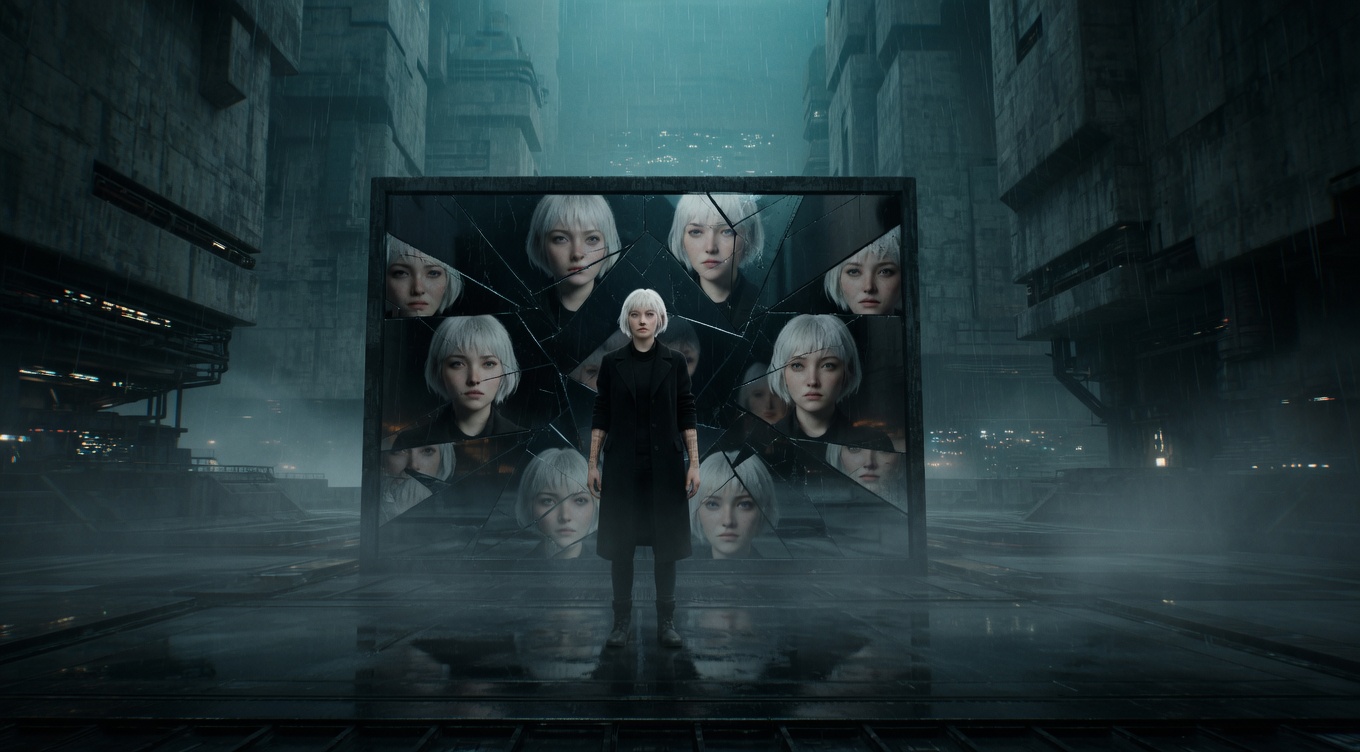
Motif cinematic example

A recurring visual, audio, or narrative element that accumulates meaning through repetition — oranges in "The Godfather," mirrors in "Black Swan," water in "The Shape of Water" — patterns that become the story's visual language. Francis Ford Coppola's oranges appear before every death in the Godfather trilogy, creating an association the viewer feels before consciously understanding it. Kubrick uses the color red as a motif in "The Shining." Darren Aronofsky uses mirrors and doubles throughout "Black Swan." Denis Villeneuve uses circular shapes as a motif in "Arrival" reflecting the film's themes of time and language. The motif is cinema's equivalent of a musical refrain — each recurrence deepens the meaning.

By Ivan Flugelman · Reviewed 16 July 2026

Prompt template

Recurring visual motif with [Subject] appearing for the nth time in the narrative, the viewer now conditioned to feel a specific emotion at the sight, the seemingly mundane detail having accumulated devastating associative weight through repetition, the Coppola technique of training the audience to read a visual symbol through consistent placement, the motif's power residing in the accumulated pattern of meaning

Replace [Subject] with your own character or scene. The prompt is technology-agnostic and works as a starting point for AI image or video generators.

When to use Motif

Use a motif when a recurring object, color, sound, shape, or gesture can become the story’s private vocabulary. Repeat it before related events, around one character, or at emotional turning points so association grows without explanation. A motif should remain recognizable while its context changes. It is especially useful in long-form narratives where viewers can feel a pattern before they consciously name it.

Directing the AI

Choose one simple, unmistakable element and define its color, shape, material, and typical frame position. Introduce it in a neutral context, then repeat it across later scenes with consistent identity but changing emotional surroundings. Do not isolate it every time; sometimes let it sit naturally in production design. Increase its prominence only when the accumulated meaning should surface. Preserve enough visual continuity that every recurrence feels intentional rather than like a similar substitute.

Common mistakes

  1. Changing the motif’s shape or color between scenes until viewers cannot recognize the repeated element.
  2. Explaining the motif in dialogue, removing the pleasure of association built through visual recurrence.
  3. Repeating the element in every scene, turning a meaningful pattern into obvious decoration and visual noise.
Sources and further reading

  1. How to Make a Short Film: An Introduction to Filmmaking — BFI / FutureLearn
  2. Filmmaking Resources for Teachers — British Film Institute

A technique is one decision. A world is the system.

A still cannot tell a story, but it can prove one happened. Before, during and after are the three states every frame sits in.

Read Story in full, free, or start with the thirteen fundamentals for building consistent characters, environments, visual logic, and stories that expand beyond one beautiful frame. There is also World Building Codex 3.0, free, and the World Building Academy.

Related techniques

Symbolism

Using concrete visual elements to represent abstract ideas or themes — a cage for imprisonment, water for rebirth, red for passion or danger — the visual poetry of cinema. Andrei Tarkovsky filled his films with water, fire, and earth symbolism in "Stalker," "Mirror," and "Nostalghia." Kubrick encoded "2001: A Space Odyssey" with evolutionary symbolism from the bone weapon to the star child. Guillermo del Toro uses fantasy creatures as symbols for fascism in "Pan's Labyrinth." The floating plastic bag in "American Beauty" became a cultural symbol, and Spike Lee's floating bed in "She's Gotta Have It" and "Do the Right Thing" uses physical impossibility as symbolic expression.

Foreshadowing

Planting subtle hints of events to come — a cracked mirror, a line of dialogue, a color choice — details that seem innocuous on first viewing but become devastating on rewatch. Stanley Kubrick embedded foreshadowing details so densely in "The Shining" that the documentary "Room 237" is dedicated entirely to analyzing them. M. Night Shyamalan structures "The Sixth Sense" so that every scene contains foreshadowing of the twist ending. The Coen Brothers plant narrative seeds early — the wood chipper glimpsed in the first act of "Fargo" becomes the instrument of horror in the third. Denis Villeneuve's "Arrival" hides its entire twist in plain sight through carefully constructed visual foreshadowing.

Repetition and Pattern

Using recurring visual elements — shapes, colors, objects — to create rhythm and unity in the frame, where breaking a pattern draws immediate attention to the disruption. Kubrick's symmetrical corridors in "The Shining" use pattern repetition to create hypnotic unease, and any break in the pattern (the twins at the end of a hallway) becomes terrifying. Wes Anderson builds frames from repeated elements — rows of identical doors, matching uniforms, symmetrical windows. Zhang Yimou uses massive pattern compositions of soldiers, lanterns, and fabric in "Hero" and "House of Flying Daggers" where a single disruption in the array carries narrative weight.

Flashback

A scene that takes the audience back to an earlier point in time, revealing backstory, providing context for present behavior, or recontextualizing what we thought we knew. "Citizen Kane" is structured entirely around flashbacks as reporters investigate Charles Foster Kane's life. Francis Ford Coppola's "The Godfather Part II" masterfully interweaves flashbacks of young Vito Corleone with the present-day story of his son Michael. Christopher Nolan uses fragmented flashbacks as a structural principle in "Memento," where the reversed chronology makes every flashback a revelation. Terrence Malick's "The Tree of Life" uses flashback as pure sensory memory, evoking childhood through images rather than plot.

Breaking the Fourth Wall

A character directly addresses or acknowledges the audience, shattering the illusion of the fictional world to create intimacy, comedy, or existential awareness. Groucho Marx was an early master, but the technique reached its dramatic potential when Ingmar Bergman had actors stare into the camera in "Persona" and "Summer with Monika." Ferris Bueller's conspiratorial monologues to the audience in John Hughes's film became iconic, and Kevin Spacey's direct address in "House of Cards" (inspired by Ian Richardson in the original BBC series) made the fourth wall break a prestige TV staple. Spike Lee's characters break the fourth wall for political address, and Fleabag's knowing glances in Phoebe Waller-Bridge's series elevated the technique to new emotional heights.

In Medias Res

Beginning the story in the middle of the action rather than from the chronological start, hooking the audience immediately and creating mystery about how we got here. The technique dates to Homer's Odyssey and has been a staple of cinema since film noir. Quentin Tarantino opens "Reservoir Dogs" in the aftermath of a heist gone wrong, and Christopher Nolan begins "The Dark Knight" mid-robbery. The Coen Brothers drop viewers into the middle of violent chaos in "No Country for Old Men." Sam Mendes opens "American Beauty" with Kevin Spacey narrating from beyond the grave, and Danny Boyle begins "Trainspotting" with a full-sprint chase sequence set to Iggy Pop.

Cliffhanger

Ending a scene, episode, or act at a moment of peak suspense, leaving the outcome unresolved and exploiting the human need for closure to keep audiences desperate for more. The term comes from Thomas Hardy's serialized novel "A Pair of Blue Eyes," where a character literally hangs from a cliff. "The Empire Strikes Back" ends on one of cinema's greatest cliffhangers — Han frozen in carbonite, Luke maimed and shattered by Vader's revelation. Television perfected the cliffhanger with "Dallas" 's "Who shot J.R.?" and "Breaking Bad"'s mid-season endings. Christopher Nolan ends "Inception" on a philosophical cliffhanger with the spinning top.

Flashforward

A scene that jumps ahead to show future events before returning to the present timeline, creating dramatic irony, dread, or anticipation by revealing a destination before the journey. Nicolas Roeg used flashforwards brilliantly in "Don't Look Now," where glimpses of the future create a web of dread throughout the film. "Breaking Bad" famously opens seasons with enigmatic flashforwards — the machine gun in the trunk, the burning teddy bear — that recontextualize everything that follows. Denis Villeneuve's "Arrival" builds its entire narrative twist on what the audience assumes are flashbacks but are actually flashforwards, fundamentally altering the audience's understanding of time and memory.

Non-Linear Narrative

A story told out of chronological order — rearranging time to create mystery, thematic resonance, or a puzzle the audience assembles. Quentin Tarantino's "Pulp Fiction" made non-linear narrative a mainstream phenomenon, while Christopher Nolan's "Memento" pushed it to its logical extreme by running the entire film in reverse. Alejandro González Iñárritu's "21 Grams" fragments three timelines into a mosaic, and Denis Villeneuve's "Arrival" uses non-linear structure to redefine the audience's understanding of time itself. Gaspar Noé's "Irréversible" tells its story in reverse chronological order, making its final scene of peaceful joy the most devastating in the film.