← Cinematique Storytelling · Intermediate

Breaking the Fourth Wall Prompt for AI Image & Video

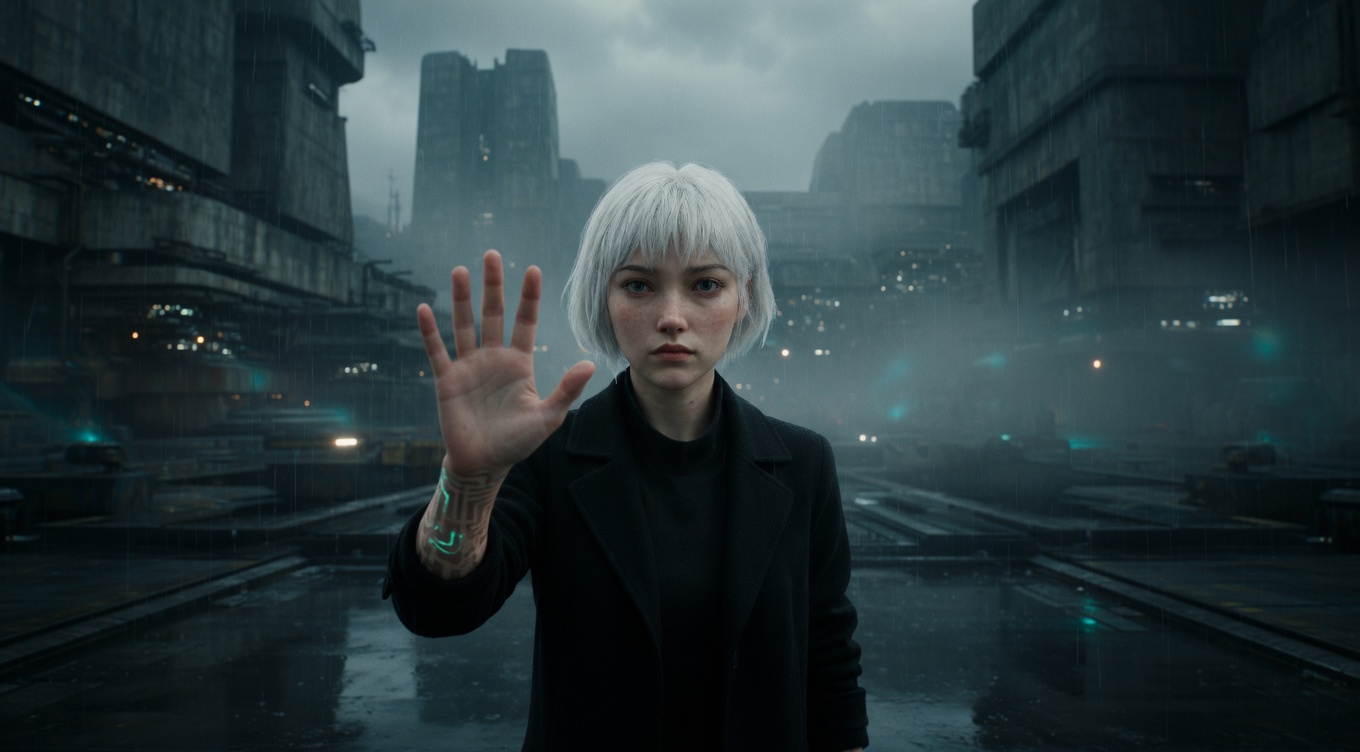
Breaking the Fourth Wall cinematic example

A character directly addresses or acknowledges the audience, shattering the illusion of the fictional world to create intimacy, comedy, or existential awareness. Groucho Marx was an early master, but the technique reached its dramatic potential when Ingmar Bergman had actors stare into the camera in "Persona" and "Summer with Monika." Ferris Bueller's conspiratorial monologues to the audience in John Hughes's film became iconic, and Kevin Spacey's direct address in "House of Cards" (inspired by Ian Richardson in the original BBC series) made the fourth wall break a prestige TV staple. Spike Lee's characters break the fourth wall for political address, and Fleabag's knowing glances in Phoebe Waller-Bridge's series elevated the technique to new emotional heights.

By Ivan Flugelman · Reviewed 16 July 2026

Prompt template

[Subject] suddenly turning to look directly into the camera lens with a knowing expression, the other figures frozen in their activity unaware of the breach, the direct eye contact creating an instant conspiratorial bond with the viewer, the camera positioned exactly where an observer would be making the viewer complicit, the Fleabag-Ferris Bueller intimacy of a character who trusts the audience more than anyone in their own world

Replace [Subject] with your own character or scene. The prompt is technology-agnostic and works as a starting point for AI image or video generators.

When to use Breaking the Fourth Wall

Use breaking the fourth wall when the character should recruit the audience as confidant, witness, judge, or accomplice. A glance can land a joke; sustained address can expose a private truth or rupture the fictional world. Establish normal scene behavior first so the breach has force. The technique loses impact if every character acknowledges the camera or if direct address carries no new relationship to the viewer.

Directing the AI

Position the camera exactly where an observer would stand, at the character’s eye level. Let the surrounding action continue or briefly freeze while the subject turns and fixes direct, unwavering eye contact on the lens. Keep the expression specific: conspiratorial, accusatory, amused, or exposed. Other characters should remain unaware unless the story demands a larger rupture. Hold the gaze long enough to create complicity, then return the subject to the scene with a readable emotional consequence.

Common mistakes

  1. Having every figure look into camera, which destroys the private bond between one character and the audience.
  2. Using a vague neutral expression when the direct gaze needs a precise comic or dramatic intention.
  3. Beginning with direct address before establishing the fictional space, leaving no illusion for the character to break.

Sources and further reading

  1. How to Make a Short Film: An Introduction to Filmmaking — BFI / FutureLearn
  2. Filmmaking Resources for Teachers — British Film Institute

A technique is one decision. A world is the system.

A still cannot tell a story, but it can prove one happened. Before, during and after are the three states every frame sits in.

Read Story in full, free, or start with the thirteen fundamentals for building consistent characters, environments, visual logic, and stories that expand beyond one beautiful frame. There is also World Building Codex 3.0, free, and the World Building Academy.

Related techniques

Head-On Shot

A shot where the subject moves or faces directly toward the camera, creating a confrontational, powerful feeling as the subject approaches or stares directly at the viewer. Stanley Kubrick mastered the head-on shot with his famous "Kubrick stare" — characters like Alex in "A Clockwork Orange" and Jack Torrance in "The Shining" glaring directly into the lens with menacing intensity. Spike Lee's double-dolly head-on shots place characters in direct communion with the audience, while Wes Anderson uses symmetrical head-on framing as a core visual signature in every film.

P.O.V. Shot

Shows the scene exactly as a character sees it, placing the viewer inside their subjective experience and creating powerful identification and immersion. Hitchcock was the master of POV, using subjective shots in "Rear Window" to lock the audience into James Stewart's voyeuristic gaze, and in "Vertigo" to plunge viewers into the protagonist's acrophobia. Gaspar Noé built "Enter the Void" entirely from a first-person perspective, including the afterlife. The "Peep Show" technique was also used to devastating effect by Kathryn Bigelow in "Strange Days" and Jonathan Glazer in "Under the Skin."

Voiceover Narration

A character's voice speaking over the visuals, providing internal thoughts, context, or commentary that can create intimacy, irony, or an essay-like quality depending on tone. Martin Scorsese uses voiceover as a vital narrative engine — Henry Hill's running commentary in "Goodfellas" is inseparable from the film's identity. Terrence Malick's whispered, philosophical voiceovers in "The Thin Red Line" and "The Tree of Life" create an interior poetry. Billy Wilder used voiceover to brilliant ironic effect in "Sunset Boulevard," narrated by a dead man. Wong Kar-wai's voiceovers in "In the Mood for Love" turn interior monologue into pure longing.

Flashback

A scene that takes the audience back to an earlier point in time, revealing backstory, providing context for present behavior, or recontextualizing what we thought we knew. "Citizen Kane" is structured entirely around flashbacks as reporters investigate Charles Foster Kane's life. Francis Ford Coppola's "The Godfather Part II" masterfully interweaves flashbacks of young Vito Corleone with the present-day story of his son Michael. Christopher Nolan uses fragmented flashbacks as a structural principle in "Memento," where the reversed chronology makes every flashback a revelation. Terrence Malick's "The Tree of Life" uses flashback as pure sensory memory, evoking childhood through images rather than plot.

Foreshadowing

Planting subtle hints of events to come — a cracked mirror, a line of dialogue, a color choice — details that seem innocuous on first viewing but become devastating on rewatch. Stanley Kubrick embedded foreshadowing details so densely in "The Shining" that the documentary "Room 237" is dedicated entirely to analyzing them. M. Night Shyamalan structures "The Sixth Sense" so that every scene contains foreshadowing of the twist ending. The Coen Brothers plant narrative seeds early — the wood chipper glimpsed in the first act of "Fargo" becomes the instrument of horror in the third. Denis Villeneuve's "Arrival" hides its entire twist in plain sight through carefully constructed visual foreshadowing.

In Medias Res

Beginning the story in the middle of the action rather than from the chronological start, hooking the audience immediately and creating mystery about how we got here. The technique dates to Homer's Odyssey and has been a staple of cinema since film noir. Quentin Tarantino opens "Reservoir Dogs" in the aftermath of a heist gone wrong, and Christopher Nolan begins "The Dark Knight" mid-robbery. The Coen Brothers drop viewers into the middle of violent chaos in "No Country for Old Men." Sam Mendes opens "American Beauty" with Kevin Spacey narrating from beyond the grave, and Danny Boyle begins "Trainspotting" with a full-sprint chase sequence set to Iggy Pop.

Cliffhanger

Ending a scene, episode, or act at a moment of peak suspense, leaving the outcome unresolved and exploiting the human need for closure to keep audiences desperate for more. The term comes from Thomas Hardy's serialized novel "A Pair of Blue Eyes," where a character literally hangs from a cliff. "The Empire Strikes Back" ends on one of cinema's greatest cliffhangers — Han frozen in carbonite, Luke maimed and shattered by Vader's revelation. Television perfected the cliffhanger with "Dallas" 's "Who shot J.R.?" and "Breaking Bad"'s mid-season endings. Christopher Nolan ends "Inception" on a philosophical cliffhanger with the spinning top.

Flashforward

A scene that jumps ahead to show future events before returning to the present timeline, creating dramatic irony, dread, or anticipation by revealing a destination before the journey. Nicolas Roeg used flashforwards brilliantly in "Don't Look Now," where glimpses of the future create a web of dread throughout the film. "Breaking Bad" famously opens seasons with enigmatic flashforwards — the machine gun in the trunk, the burning teddy bear — that recontextualize everything that follows. Denis Villeneuve's "Arrival" builds its entire narrative twist on what the audience assumes are flashbacks but are actually flashforwards, fundamentally altering the audience's understanding of time and memory.

Non-Linear Narrative

A story told out of chronological order — rearranging time to create mystery, thematic resonance, or a puzzle the audience assembles. Quentin Tarantino's "Pulp Fiction" made non-linear narrative a mainstream phenomenon, while Christopher Nolan's "Memento" pushed it to its logical extreme by running the entire film in reverse. Alejandro González Iñárritu's "21 Grams" fragments three timelines into a mosaic, and Denis Villeneuve's "Arrival" uses non-linear structure to redefine the audience's understanding of time itself. Gaspar Noé's "Irréversible" tells its story in reverse chronological order, making its final scene of peaceful joy the most devastating in the film.