← Cinematique Lighting · Intermediate

Blue Hour Prompt for AI Image & Video

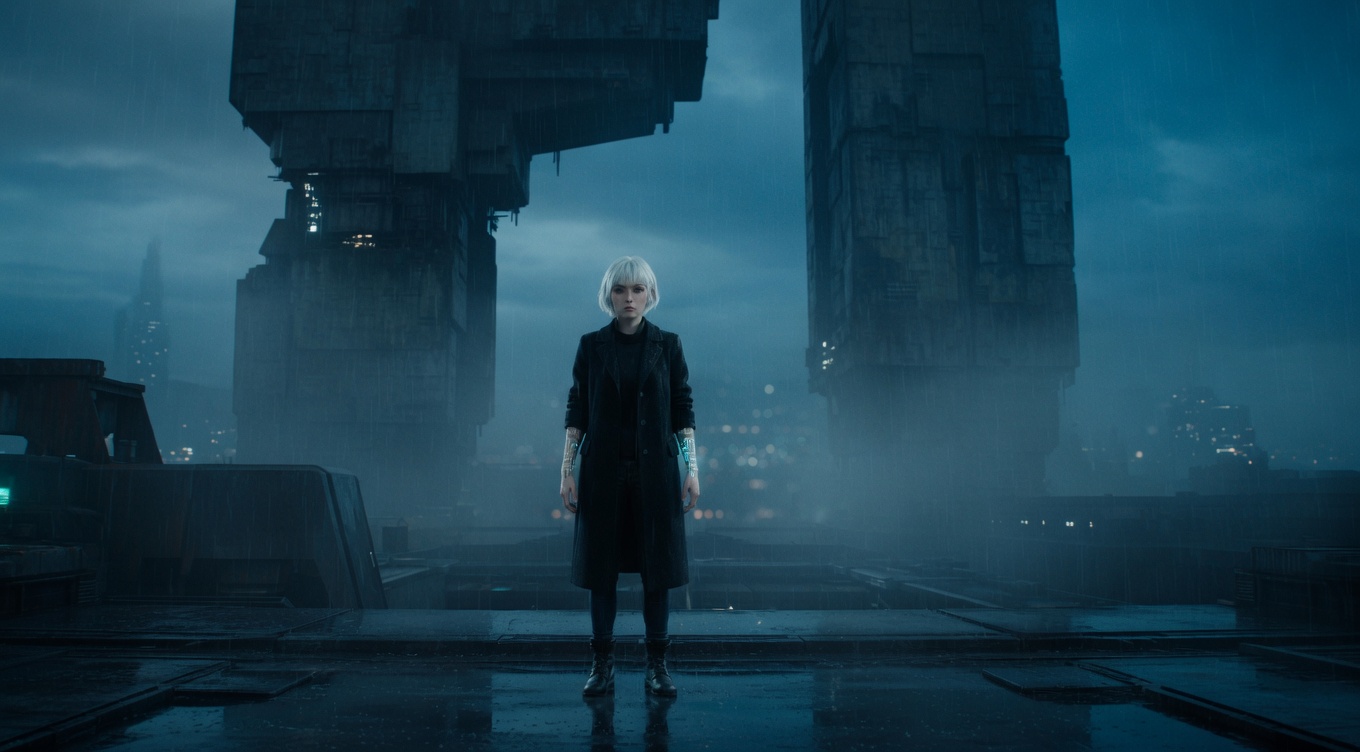
Blue Hour cinematic example

The cool, diffused light just before sunrise or after sunset when the sky turns deep blue, creating a melancholic, contemplative, or mysterious atmosphere. Michael Mann is the master of blue hour photography, using the transitional twilight extensively in "Heat," "Collateral," and "Miami Vice" to create his signature cool urban melancholy. Janusz Kamiński shot the D-Day sequence in "Saving Private Ryan" during overcast blue-hour conditions for authenticity, and Wong Kar-wai's "Fallen Angels" uses Hong Kong's blue hour as an emotional blanket over its lonely characters.

By Ivan Flugelman · Reviewed 16 July 2026

Prompt template

Blue hour twilight twenty minutes after sunset enveloping [Subject], the sky a luminous deep cobalt blue glowing from within, warm amber artificial light sources contrasting with the pervasive blue atmosphere, shot on Alexa at high ISO with Cooke S4 glass rendering practical lights as soft warm glows, the contemplative melancholy of Michael Mann's visual language

Replace [Subject] with your own character or scene. The prompt is technology-agnostic and works as a starting point for AI image or video generators.

When to use Blue Hour

Use blue hour for transitional scenes that need cool calm, loneliness, anticipation, or mystery without full darkness. The luminous sky keeps exterior detail visible while windows, streetlights, and vehicles begin to glow warm. It suits city arrivals, departures, reflective portraits, and quiet suspense. Keep it distinct from night by preserving cobalt ambient light and from sunset by removing direct golden sunlight.

Directing the AI

Set the moment roughly twenty minutes after sunset or before sunrise, when the sky is deep cobalt but still luminous. Let cool ambient light wrap buildings and faces while warm amber practicals punctuate windows, signs, or vehicles. Use high sensitivity with soft halation around those sources, preserving detail in both sky and shadow. For video, hold the narrow twilight state consistently; do not let the sky flicker between daylight, sunset orange, and black night.

Common mistakes

  1. Making the sky completely black, which turns the scene into night and removes blue hour's luminous transition.
  2. Adding direct orange sunlight even though the sun has already dropped below the horizon in the intended setup.
  3. Coloring skin and every object uniformly blue, instead of balancing cool ambience with selective warm practical sources.

Sources and further reading

  1. Film Lighting — The Ultimate Guide — StudioBinder
  2. Film Lighting Techniques — How to Get a Cinematic Look — StudioBinder

A technique is one decision. A world is the system.

Light is a world rule, not a per-shot decision. What is in the air between the camera and the subject is what makes a place feel inhabited.

Read Atmosphere in full, free, or start with the thirteen fundamentals for building consistent characters, environments, visual logic, and stories that expand beyond one beautiful frame. There is also World Building Codex 3.0, free, and the World Building Academy.

Related techniques

Golden Hour

The warm, soft, directional light that occurs shortly after sunrise or before sunset, casting long shadows and bathing everything in a warm amber glow that flatters skin and landscapes. Terrence Malick is the supreme poet of golden hour — "Days of Heaven," shot almost entirely in magic hour by Néstor Almendros and Haskell Wexler, remains the gold standard. Emmanuel Lubezki captured breathtaking golden hour light in "The Revenant" and "The New World" using only natural illumination. Ridley Scott's golden hour battle sequences in "Gladiator" lend warmth to violence, and Sofia Coppola bathes "The Virgin Suicides" in nostalgic golden light.

Practical Lighting

Using visible light sources within the scene — lamps, candles, neon signs, TV screens — as the actual illumination, creating naturalistic, motivated lighting with rich atmosphere. Stanley Kubrick famously lit "Barry Lyndon" using only candles and natural window light, requiring specially modified NASA lenses. Wong Kar-wai and Christopher Doyle use neon signs and fluorescent tubes as practical sources in "Chungking Express" and "In the Mood for Love," turning Hong Kong's light pollution into visual poetry. Roger Deakins uses practicals masterfully in "Blade Runner 2049," letting in-scene holographic advertisements and industrial lights do the work of sculpting the frame.

Color Temperature

The warmth or coolness of light measured in Kelvin — warm light (orange/amber) suggests comfort and intimacy while cool light (blue) suggests detachment, technology, or night. Steven Soderbergh is a master of deliberate color temperature manipulation, using amber for Mexico and blue-green for the US in "Traffic" to distinguish storylines. Emmanuel Lubezki plays warm and cool temperatures against each other in nearly every frame of "The Revenant." The contrast between warm practicals and cool ambient light is a fundamental tool of modern cinematography, used by Hoyte van Hoytema in "Interstellar" and Bradford Young in "Solo: A Star Wars Story."

Three-Point Lighting

The foundational lighting setup using three sources: a key light as the primary source, a fill light to soften shadows, and a backlight to separate the subject from the background. Developed during Hollywood's Golden Age by cinematographers like James Wong Howe and Gregg Toland, three-point lighting became the grammar of classical Hollywood cinema. It defined the glamorous look of stars from Garbo to Monroe and remains the starting point for all narrative lighting. Modern cinematographers like Roger Deakins and Janusz Kamiński build upon and deconstruct this foundation in every film they shoot.

Key Light

The primary and brightest light source in a scene, whose position, intensity, and quality define the overall mood and establish the dominant direction of light and shadow. Gordon Willis, "the Prince of Darkness," used deliberately underexposed key lights in "The Godfather" to create the shadowy world of the Corleone family. Vittorio Storaro sculpted light as pure emotion in "Apocalypse Now" and "Last Tango in Paris." The placement and quality of the key light is the single most important creative decision in any lighting setup, shaping everything from film noir's harsh side-key to Lubezki's soft naturalistic sources.

High-Key Lighting

A bright, even lighting style with minimal shadows that creates an optimistic, clean, or ethereal atmosphere, common in comedies, commercials, and dream sequences. The classic Hollywood musical relied on high-key lighting — Vincente Minnelli's "An American in Paris" and "The Band Wagon" glow with uniform brightness. Kubrick used clinical high-key lighting in the space station sequences of "2001" to create sterile futurism, and Sofia Coppola bathes "Marie Antoinette" in high-key pastel light to capture the candy-colored excess of Versailles. The technique is also fundamental to the visual language of romantic comedies from Nora Ephron to Nancy Meyers.

Low-Key Lighting

A dramatic lighting style dominated by deep shadows and high contrast where only select areas are illuminated, creating mystery, tension, and a noir-like atmosphere. John Alton literally wrote the book — "Painting with Light" — and defined low-key noir cinematography in films like "The Big Combo" and "T-Men." Gordon Willis pushed low-key to its extreme in "The Godfather," with Marlon Brando's eyes often invisible in shadow. Bradford Young's low-key work in "Arrival" and "Selma" brought a moody, naturalistic darkness to modern cinema, and Robert Richardson uses low-key lighting in Tarantino's "The Hateful Eight" to make a single-room Western feel like a horror film.

Chiaroscuro

An extreme contrast between light and dark, inspired by Renaissance painting, creating deeply sculpted, painterly images with rich shadows and selective illumination. Directly descended from Caravaggio's revolutionary use of tenebrism in paintings like "The Calling of Saint Matthew," chiaroscuro entered cinema through German Expressionism and was perfected by Gordon Willis in "The Godfather" — his overhead toplight leaving Brando's eye sockets in impenetrable shadow became one of the most imitated looks in film history. Vittorio Storaro brought painterly chiaroscuro to "Apocalypse Now," and Barry Jenkins' cinematographer James Laxton uses it to sculpt Black skin with luminous beauty in "Moonlight."

Rembrandt Lighting

Named after the Dutch painter — light positioned to create a small triangle of light on the shadow side of the face, a classic portrait technique conveying depth and character. Rembrandt van Rijn developed this lighting naturally in his self-portraits, and Hollywood cinematographers adopted it as the gold standard for dramatic portraiture. Sven Nykvist, Ingmar Bergman's longtime cinematographer, used Rembrandt lighting extensively in "Fanny and Alexander" and "Cries and Whispers." Conrad Hall employed it throughout "Road to Perdition," and it remains the go-to lighting pattern for dramatic headshots and interview setups worldwide.