← Cinematique Lighting · Basic

Ambient Light Prompt for AI Image & Video

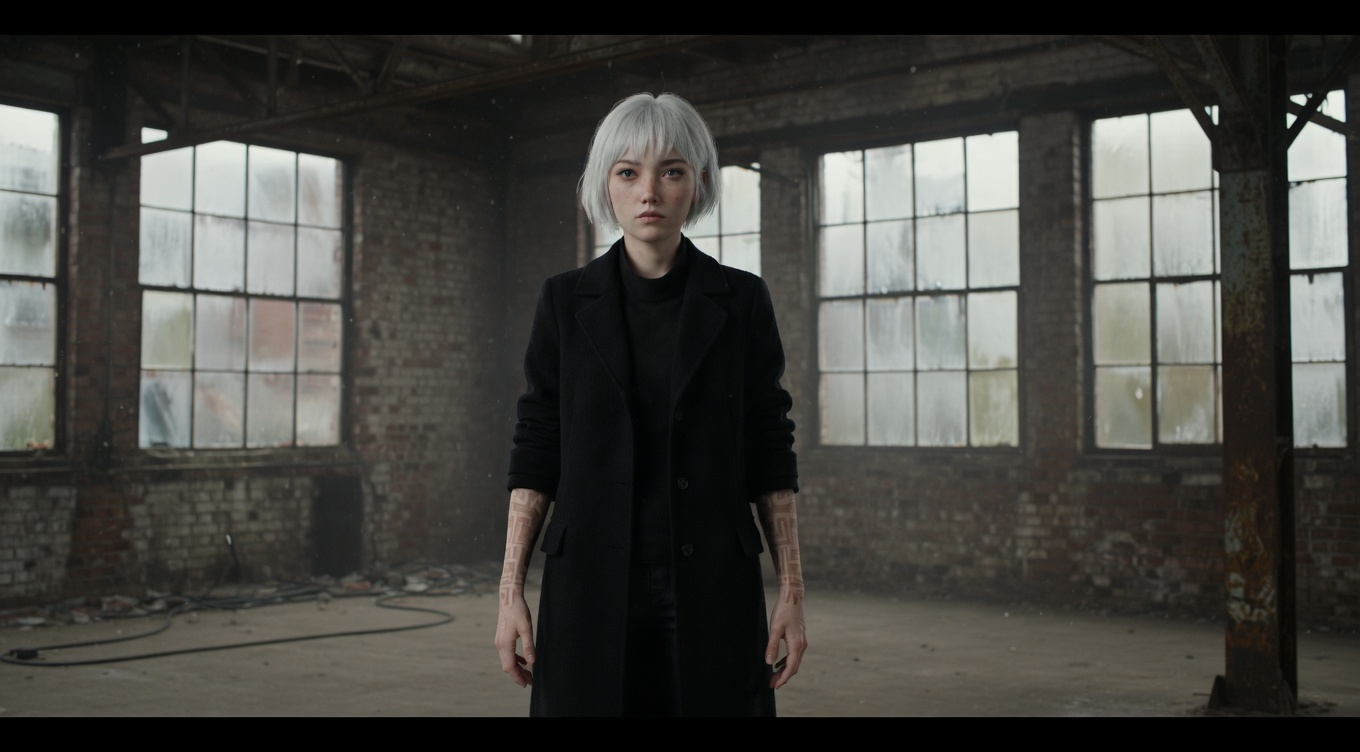
Ambient Light cinematic example

The existing, non-directional light present in an environment before any additional lighting is added, the base layer of illumination that sets the overall brightness and mood. Frederick Wiseman's documentaries like "Titicut Follies" and "High School" rely entirely on ambient light to maintain observational authenticity. The Dardenne brothers shoot their fiction films in ambient conditions to preserve documentary realism. Understanding and working with ambient light — the blue fill of an overcast sky, the warm glow of an office space, the green tint of a forest canopy — is the foundation upon which all other lighting decisions are built.

By Ivan Flugelman · Reviewed 16 July 2026

Prompt template

Ambient light only on [Subject], the existing institutional or natural illumination providing the sole source, no dramatic shadows or cinematic enhancement, the honest unmanipulated light of a real place at a real time, shot on a fast lens wide open to handle the lower light levels, documentary naturalism where the space itself determines the visual mood

Replace [Subject] with your own character or scene. The prompt is technology-agnostic and works as a starting point for AI image or video generators.

When to use Ambient Light

Choose ambient light when the location's existing brightness and color should define the scene before any dramatic intervention. It suits documentary observation, institutional spaces, overcast exteriors, offices, forests, and other environments with broad non-directional illumination. Ambient light can make a frame feel immediate and unperformed, but it also exposes the space's natural tint and unevenness. Use it when authenticity matters more than sculpted faces or polished separation.

Directing the AI

Describe the environment as the source: cool overcast sky, warm office ceiling glow, or green light filtered through a canopy. Keep illumination broad and low in directionality, with restrained contrast and no unexplained rim or spotlight. Allow slight color contamination and uneven exposure where the real space would produce it. Maintain readable detail without turning the scene glossy. For video, let subjects move through the existing brightness pattern rather than carrying a perfectly shaped portrait light with them.

Common mistakes

  1. Adding dramatic key and rim lights while calling the result ambient, which contradicts the technique's environmental base layer.
  2. Neutralizing every location tint, removing the blue, green, or warm cast that makes the existing light specific.
  3. Making ambient illumination perfectly uniform, even where walls, ceilings, windows, or foliage should create visible variation.

Sources and further reading

  1. Film Lighting — The Ultimate Guide — StudioBinder
  2. Film Lighting Techniques — How to Get a Cinematic Look — StudioBinder

A technique is one decision. A world is the system.

Light is a world rule, not a per-shot decision. What is in the air between the camera and the subject is what makes a place feel inhabited.

Read Atmosphere in full, free, or start with the thirteen fundamentals for building consistent characters, environments, visual logic, and stories that expand beyond one beautiful frame. There is also World Building Codex 3.0, free, and the World Building Academy.

Related techniques

Available Light

Shooting with only the light naturally present in the location — no artificial movie lights added — creating an authentic, documentary quality that requires careful exposure management. Kubrick's "Barry Lyndon" is the most famous example, shot entirely by candlelight and window light using a modified NASA f/0.7 Zeiss lens. Emmanuel Lubezki committed to available light for Terrence Malick's "The New World" and "The Tree of Life," as well as Iñárritu's "The Revenant," winning three consecutive Oscars for his mastery of natural illumination. Bradford Young's available-light work in "Arrival" created an intimate, naturalistic atmosphere within science fiction.

Practical Lighting

Using visible light sources within the scene — lamps, candles, neon signs, TV screens — as the actual illumination, creating naturalistic, motivated lighting with rich atmosphere. Stanley Kubrick famously lit "Barry Lyndon" using only candles and natural window light, requiring specially modified NASA lenses. Wong Kar-wai and Christopher Doyle use neon signs and fluorescent tubes as practical sources in "Chungking Express" and "In the Mood for Love," turning Hong Kong's light pollution into visual poetry. Roger Deakins uses practicals masterfully in "Blade Runner 2049," letting in-scene holographic advertisements and industrial lights do the work of sculpting the frame.

Cinéma Vérité

A documentary approach using handheld cameras, natural lighting, and unscripted moments to capture truth — the camera is acknowledged as present, truth provoked rather than merely observed. Jean Rouch and Edgar Morin coined the term with "Chronicle of a Summer" (1961), where the filmmakers actively engage with their subjects. The American equivalent, "direct cinema" (Frederick Wiseman, the Maysles Brothers), takes a more observational approach. The Dardenne Brothers' fiction films apply cinéma vérité techniques to narrative cinema. Paul Greengrass brings cinéma vérité energy to mainstream thrillers like "United 93" and the "Bourne" trilogy, making Hollywood action feel like documentary.

Three-Point Lighting

The foundational lighting setup using three sources: a key light as the primary source, a fill light to soften shadows, and a backlight to separate the subject from the background. Developed during Hollywood's Golden Age by cinematographers like James Wong Howe and Gregg Toland, three-point lighting became the grammar of classical Hollywood cinema. It defined the glamorous look of stars from Garbo to Monroe and remains the starting point for all narrative lighting. Modern cinematographers like Roger Deakins and Janusz Kamiński build upon and deconstruct this foundation in every film they shoot.

Key Light

The primary and brightest light source in a scene, whose position, intensity, and quality define the overall mood and establish the dominant direction of light and shadow. Gordon Willis, "the Prince of Darkness," used deliberately underexposed key lights in "The Godfather" to create the shadowy world of the Corleone family. Vittorio Storaro sculpted light as pure emotion in "Apocalypse Now" and "Last Tango in Paris." The placement and quality of the key light is the single most important creative decision in any lighting setup, shaping everything from film noir's harsh side-key to Lubezki's soft naturalistic sources.

High-Key Lighting

A bright, even lighting style with minimal shadows that creates an optimistic, clean, or ethereal atmosphere, common in comedies, commercials, and dream sequences. The classic Hollywood musical relied on high-key lighting — Vincente Minnelli's "An American in Paris" and "The Band Wagon" glow with uniform brightness. Kubrick used clinical high-key lighting in the space station sequences of "2001" to create sterile futurism, and Sofia Coppola bathes "Marie Antoinette" in high-key pastel light to capture the candy-colored excess of Versailles. The technique is also fundamental to the visual language of romantic comedies from Nora Ephron to Nancy Meyers.

Low-Key Lighting

A dramatic lighting style dominated by deep shadows and high contrast where only select areas are illuminated, creating mystery, tension, and a noir-like atmosphere. John Alton literally wrote the book — "Painting with Light" — and defined low-key noir cinematography in films like "The Big Combo" and "T-Men." Gordon Willis pushed low-key to its extreme in "The Godfather," with Marlon Brando's eyes often invisible in shadow. Bradford Young's low-key work in "Arrival" and "Selma" brought a moody, naturalistic darkness to modern cinema, and Robert Richardson uses low-key lighting in Tarantino's "The Hateful Eight" to make a single-room Western feel like a horror film.

Chiaroscuro

An extreme contrast between light and dark, inspired by Renaissance painting, creating deeply sculpted, painterly images with rich shadows and selective illumination. Directly descended from Caravaggio's revolutionary use of tenebrism in paintings like "The Calling of Saint Matthew," chiaroscuro entered cinema through German Expressionism and was perfected by Gordon Willis in "The Godfather" — his overhead toplight leaving Brando's eye sockets in impenetrable shadow became one of the most imitated looks in film history. Vittorio Storaro brought painterly chiaroscuro to "Apocalypse Now," and Barry Jenkins' cinematographer James Laxton uses it to sculpt Black skin with luminous beauty in "Moonlight."

Rembrandt Lighting

Named after the Dutch painter — light positioned to create a small triangle of light on the shadow side of the face, a classic portrait technique conveying depth and character. Rembrandt van Rijn developed this lighting naturally in his self-portraits, and Hollywood cinematographers adopted it as the gold standard for dramatic portraiture. Sven Nykvist, Ingmar Bergman's longtime cinematographer, used Rembrandt lighting extensively in "Fanny and Alexander" and "Cries and Whispers." Conrad Hall employed it throughout "Road to Perdition," and it remains the go-to lighting pattern for dramatic headshots and interview setups worldwide.