← Cinematique Genres & Styles · Advanced

Surrealism Prompt for AI Image & Video

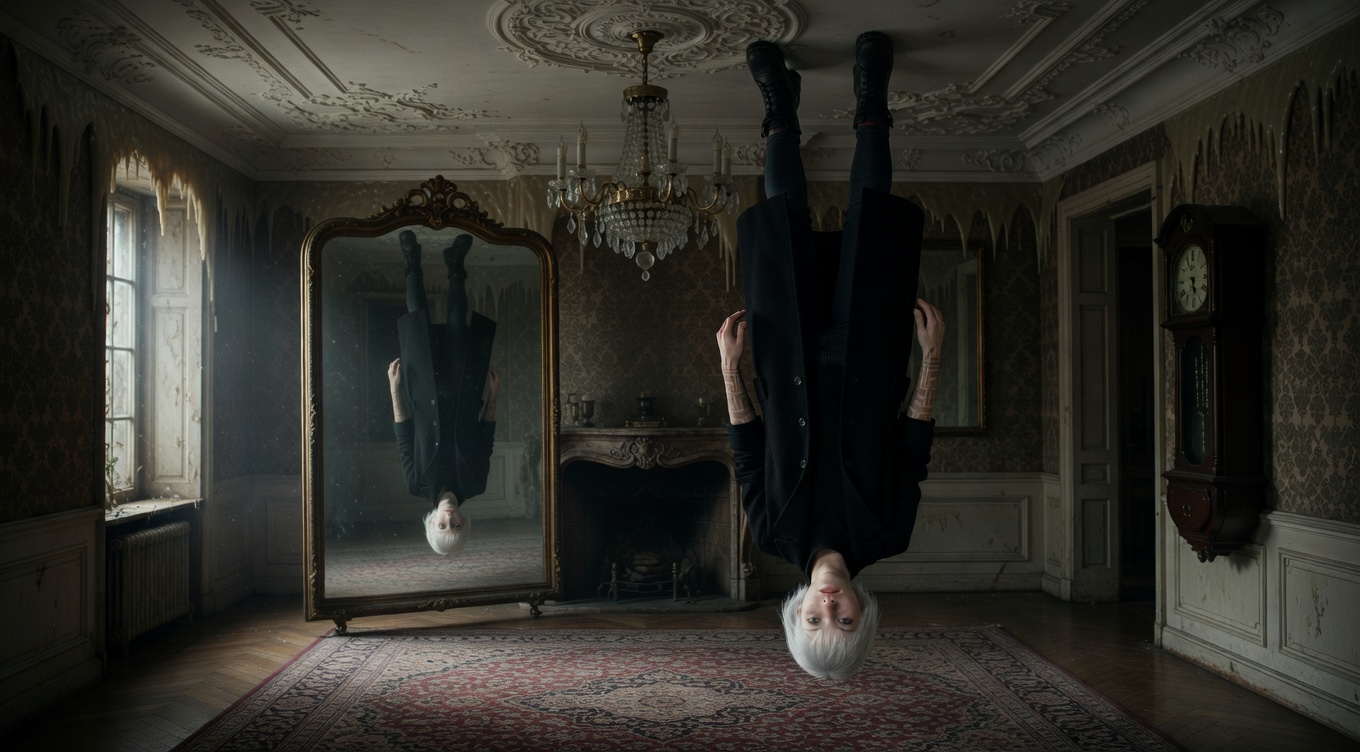
Surrealism cinematic example

A movement drawing on dreams, the subconscious, and irrational imagery to create art that defies logic — melting clocks, impossible architecture, dream logic replacing narrative cause-and-effect. Luis Buñuel and Salvador Dalí created cinema's first surrealist film, "Un Chien Andalou" (1929), with its infamous eye-slicing opening. Buñuel continued making surrealist cinema for fifty years through "The Discreet Charm of the Bourgeoisie." David Lynch is surrealism's modern heir — "Eraserhead," "Mulholland Drive," and "Twin Peaks: The Return" operate on dream logic. Alejandro Jodorowsky's "El Topo" and "The Holy Mountain" push surrealism to psychedelic extremes, and Charlie Kaufman's "Eternal Sunshine" and "Synecdoche, New York" bring surrealism into intimate emotional territory.

By Ivan Flugelman · Reviewed 16 July 2026

Prompt template

Surrealist scene with [Subject] in a world where dream logic replaces physical reality, impossible elements presented with the matter-of-fact certainty of documentary, lighting impossibly motivated from sources that do not exist, the Bunuel-Lynch visual language where the subconscious mind's architecture is rendered as physical space, the unsettling beauty of a world where logic has been replaced by feeling

Replace [Subject] with your own character or scene. The prompt is technology-agnostic and works as a starting point for AI image or video generators.

When to use Surrealism

Use surrealism when subconscious feeling, desire, dread, or contradiction matters more than literal cause and effect. It suits dreams, identity fractures, psychological transitions, and worlds where impossible events reveal emotional truth. Establish a visual rule that belongs to the scene’s feeling, then treat it as ordinary. Random strangeness is not enough; the strongest surreal image is specific, coherent, and impossible for a reason.

Directing the AI

Place the subject in a recognizable setting, then alter one governing reality: scale, gravity, architecture, identity, or time. Present the impossible element with neutral framing and documentary certainty rather than fantasy spectacle. Motivate light from sources that visibly cannot exist, but keep surfaces and shadows internally consistent. Repeat a shape or action to establish dream logic. Let emotion determine transitions, while preserving enough spatial continuity that the viewer can inhabit the irrational world.

Common mistakes

  1. Filling the frame with unrelated strange objects, creating visual novelty without emotional or thematic logic.
  2. Lighting impossible events like spectacular fantasy, which weakens their calm and unsettling matter-of-fact quality.
  3. Changing the world’s rules every moment, leaving no dream logic for the audience to follow.
Sources and further reading

  1. Genres: Where to Draw the Line? — British Film Institute
  2. BFI Screen Guides — Bloomsbury / BFI

A technique is one decision. A world is the system.

A genre is a container, not a look. What makes a style yours is the palette, the materials and the light behaving the same way every time.

Read Visual Language in full, free, or start with the thirteen fundamentals for building consistent characters, environments, visual logic, and stories that expand beyond one beautiful frame. There is also World Building Codex 3.0, free, and the World Building Academy.

Related techniques

Morphing / Dissolve Effect

A digital transformation effect where one form smoothly dissolves, transmutes, or reshapes into another — character dissolving into particles, liquid metal transformation, ethereal dissolution, matter transmutation. Originally pioneered by ILM for the T-1000 in "Terminator 2," morphing has evolved from face-to-face blending into a rich vocabulary of transformation effects. In AI image and video generation, morphing and dissolve effects are among the most promptable visual transformations, allowing creators to depict characters dissolving into elements, reforming from abstract matter, or undergoing surreal metamorphosis.

Reverse Motion

Footage played backwards, creating surreal, uncanny, or magical effects where broken things reassemble, fallen objects rise, and the familiar becomes alien. Jean Cocteau used reverse motion to create magical effects in "Orpheus" and "Beauty and the Beast" without any optical trickery. David Lynch employs reversed footage in "Twin Peaks" for the Red Room sequences, where actors learned their dialogue backwards so that when played in reverse, the speech sounds almost but not quite right — deeply uncanny. Christopher Nolan used extensive reverse motion in "Tenet" where entire action sequences play forward and backward simultaneously.

Symbolism

Using concrete visual elements to represent abstract ideas or themes — a cage for imprisonment, water for rebirth, red for passion or danger — the visual poetry of cinema. Andrei Tarkovsky filled his films with water, fire, and earth symbolism in "Stalker," "Mirror," and "Nostalghia." Kubrick encoded "2001: A Space Odyssey" with evolutionary symbolism from the bone weapon to the star child. Guillermo del Toro uses fantasy creatures as symbols for fascism in "Pan's Labyrinth." The floating plastic bag in "American Beauty" became a cultural symbol, and Spike Lee's floating bed in "She's Gotta Have It" and "Do the Right Thing" uses physical impossibility as symbolic expression.

Film Noir

A genre defined by high-contrast black-and-white photography, urban settings, morally ambiguous characters, femme fatales, and a pervasive sense of cynicism and doom. Born from German Expressionist emigrés and American hardboiled fiction, film noir flowered in the 1940s and 50s with Billy Wilder's "Double Indemnity," Orson Welles's "Touch of Evil," and John Huston's "The Maltese Falcon." Cinematographers like John Alton and Nicholas Musuraca defined the visual language of shadows, rain, and venetian blinds. The genre was revived as neo-noir by Roman Polanski's "Chinatown," the Coen Brothers' "Blood Simple," and David Lynch's "Mulholland Drive."

German Expressionism

An early 20th-century movement using distorted sets, extreme shadows, and exaggerated angles to externalize inner psychological states — the visual DNA of modern horror and Tim Burton. Robert Wiene's "The Cabinet of Dr. Caligari" (1920) established the movement with painted shadows and impossible architecture. F.W. Murnau's "Nosferatu" and Fritz Lang's "Metropolis" expanded the vocabulary. When these filmmakers fled Nazi Germany, they brought Expressionism to Hollywood, directly influencing film noir. Tim Burton's "Batman," "Edward Scissorhands," and "Batman Returns" are modern Expressionism, and Guillermo del Toro's production design carries the movement's DNA.

Cinéma Vérité

A documentary approach using handheld cameras, natural lighting, and unscripted moments to capture truth — the camera is acknowledged as present, truth provoked rather than merely observed. Jean Rouch and Edgar Morin coined the term with "Chronicle of a Summer" (1961), where the filmmakers actively engage with their subjects. The American equivalent, "direct cinema" (Frederick Wiseman, the Maysles Brothers), takes a more observational approach. The Dardenne Brothers' fiction films apply cinéma vérité techniques to narrative cinema. Paul Greengrass brings cinéma vérité energy to mainstream thrillers like "United 93" and the "Bourne" trilogy, making Hollywood action feel like documentary.

French New Wave

A 1960s movement that broke every rule — jump cuts, handheld cameras, location shooting, fourth-wall breaks, and a rebellious rejection of polished studio filmmaking, treating cinema as conversation. Jean-Luc Godard's "Breathless" (1960) and François Truffaut's "The 400 Blows" (1959) launched the movement, joined by Agnès Varda, Jacques Rivette, Eric Rohmer, and Claude Chabrol. Cinematographer Raoul Coutard defined the visual style — handheld 16mm, natural light, real Parisian locations. The movement's influence is incalculable: Scorsese, Tarantino, Wes Anderson, Sofia Coppola, and Noah Baumbach all trace their artistic lineage directly to the Nouvelle Vague.

Found Footage

A style presenting the film as discovered amateur or surveillance recordings — "The Blair Witch Project," "Paranormal Activity," the conceit that what you're watching is "real" raw footage. Ruggero Deodato's "Cannibal Holocaust" (1980) invented the format, so convincingly that the director was charged with murder before proving the actors were alive. "The Blair Witch Project" (1999) made found footage a cultural phenomenon and a marketing revolution. "Cloverfield" brought the style to blockbuster scale, and "Paranormal Activity" proved it could be extraordinarily profitable. The format exploits our associations between low production quality and authenticity.

Spaghetti Western

Italian-produced Westerns characterized by extreme close-ups, sweeping wide shots, Morricone-style scores, morally gray antiheroes, and a stylized, operatic approach to violence. Sergio Leone defined the genre with his Dollars trilogy starring Clint Eastwood and reached its apex with "Once Upon a Time in the West" — a film built entirely from looks, silences, and Ennio Morricone's score. Leone's visual grammar of extreme close-up eyes cutting to extreme wide shots became one of cinema's most imitated styles. Sergio Corbucci's "Django" and "The Great Silence" pushed the genre toward nihilism. Tarantino's "Django Unchained" and "The Hateful Eight" are love letters to the Spaghetti Western tradition.