← Cinematique Camera Work · Advanced

One-er (Oner) Prompt for AI Image & Video

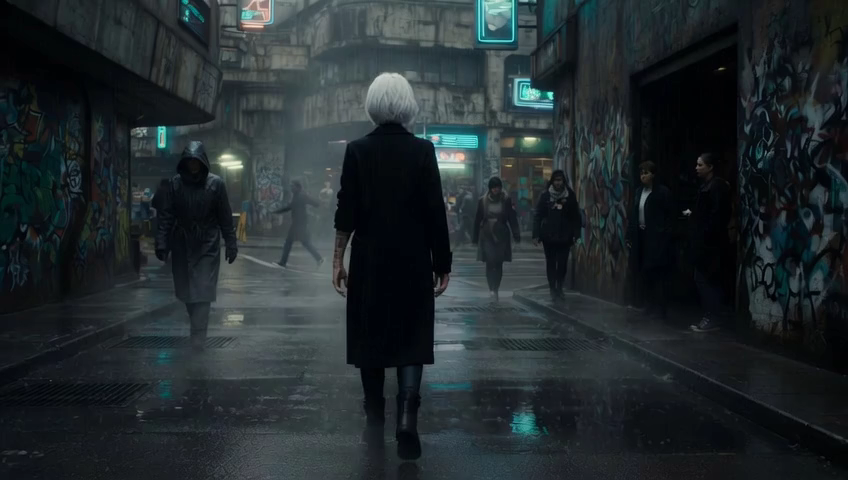
One-er (Oner) cinematic example

An entire scene captured in a single unbroken take with no cuts, demanding precise choreography of actors, camera, and crew while creating real-time tension and immersive spatial continuity. Alfonso Cuarón and Emmanuel Lubezki pushed the oner to its limits in "Children of Men" with a six-minute car ambush shot, and Alejandro González Iñárritu structured the entirety of "Birdman" as one apparent continuous take. Alexander Sokurov actually achieved a true single-take feature film with "Russian Ark," 96 unbroken minutes wandering through the Hermitage Museum. Sam Mendes' "1917" used hidden cuts to create the illusion of a two-hour oner through World War I trenches.

By Ivan Flugelman · Reviewed 16 July 2026

Prompt template

Long unbroken single take following [Subject] through shifting environments, the entire journey unbroken for minutes of choreographed spatial continuity, shot on Steadicam with an ARRI Alexa Mini and Cooke S4 21mm lens, the shifting light temperatures creating a living color journey through the space

Replace [Subject] with your own character or scene. The prompt is technology-agnostic and works as a starting point for AI image or video generators.

When to use One-er (Oner)

Use a oner when real-time continuity should create immersion, pressure, or virtuoso flow. It can follow characters through connected rooms, preserve an escalating performance, or make viewers discover action as the camera does. The scene needs choreography strong enough to justify the absence of cuts. Choose conventional coverage when time must compress, geography can be fragmented, or the generated path cannot remain coherent.

Directing the AI

Describe one unbroken route from the opening composition to the final position, including each doorway, turn, actor crossing, focus change, and lighting transition. Keep the lens moderately wide and the movement Steadicam-smooth so space remains readable. Assign timed actions that motivate the camera's attention without implying cuts. Carry persistent wardrobe, props, and screen direction through every beat. If hidden transitions are intended, identify the exact occlusion instead of allowing arbitrary visual resets.

Common mistakes

  1. Writing only long continuous take without mapping the route, leaving the scene vulnerable to spatial jumps and changed details.
  2. Packing unrelated events into the move, so choreography feels like a demonstration rather than one developing dramatic beat.
  3. Using abrupt focal-length changes or impossible camera teleportation that function as cuts despite continuous-shot language.
Sources and further reading

  1. 50+ Types of Camera Shots, Angles, and Techniques — StudioBinder
  2. Types of Camera Movements in Film Explained — StudioBinder

A technique is one decision. A world is the system.

Where the camera stands is not a setting, it is an argument about who has power and how large the world is.

Read Composition in full, free, or start with the thirteen fundamentals for building consistent characters, environments, visual logic, and stories that expand beyond one beautiful frame. There is also World Building Codex 3.0, free, and the World Building Academy.

Related techniques

Long Take

An extended shot that runs significantly longer than conventional cuts, building real-time tension, showcasing performance, and immersing the viewer in unbroken space and time. Alfonso Cuarón and Emmanuel Lubezki pushed the long take to new extremes in "Children of Men" with the legendary six-minute car ambush, and later in "Gravity" and "Roma." Alejandro González Iñárritu's "Birdman" is constructed as one apparent continuous take. Andrei Tarkovsky's long takes in "Stalker" and "Mirror" unfold with hypnotic patience, while Béla Tarr's "Sátántangó" contains takes lasting over ten minutes. The long take is cinema's way of refusing to blink.

Steadicam

A stabilized camera rig worn by the operator that produces smooth, floating movement while following subjects through complex environments, combining the fluidity of dolly work with the freedom of handheld. Invented by Garrett Brown, the Steadicam was first showcased in "Rocky" (1976) running up the Philadelphia Museum steps, then immortalized by Stanley Kubrick in "The Shining" — the relentless tracking shots through the Overlook Hotel's corridors remain the technique's definitive achievement. Martin Scorsese's Copacabana shot in "Goodfellas" and Paul Thomas Anderson's opening sequence in "Boogie Nights" are also landmark Steadicam moments.

Master Shot

A continuous wide shot that captures the entire scene from start to finish, serving as the foundation over which closer coverage is layered in editing. Robert Altman was famous for shooting elaborate master shots with multiple overlapping conversations in films like "Nashville" and "Short Cuts," trusting the wide frame to let audiences discover the drama themselves. Sidney Lumet staged masterful master shots in "12 Angry Men," choreographing twelve actors within a single room with balletic precision. Mike Leigh builds entire scenes from master shots that allow his actors' improvisational performances to breathe.

Aerial Shot

A shot captured from high above the ground, typically using a drone or helicopter, providing a sweeping view of landscapes, cityscapes, or large-scale action. The aerial perspective conveys omniscience, freedom, or the terrifying scale of nature. David Lean pioneered epic aerial work in "Lawrence of Arabia," while Ridley Scott used helicopter shots to establish the grandeur of ancient Rome in "Gladiator." More recently, Denis Villeneuve employed haunting aerial compositions in "Sicario" to reveal the eerie geometry of border landscapes.

Bird's Eye View

A shot taken from directly overhead, looking straight down on the subject, creating a god-like perspective that can make subjects appear small and insignificant or reveal patterns invisible from ground level. Busby Berkeley pioneered the technique in 1930s musicals, choreographing dancers into kaleidoscopic geometric formations seen from directly above. Darren Aronofsky used it extensively in "Requiem for a Dream" to convey psychological detachment, and Wes Anderson frequently employs overhead shots of meticulously arranged objects as a signature compositional device.

Close-Up

A tightly framed shot that fills the screen with a subject's face or a specific detail, revealing emotions, textures, and subtle details invisible in wider shots. Carl Theodor Dreyer's "The Passion of Joan of Arc" (1928) is built almost entirely from devastating close-ups of Renée Falconetti's face, widely considered the greatest performance ever captured on film. Sergio Leone elevated the close-up to operatic intensity in his Westerns, while Jonathan Demme's direct-to-camera close-ups in "The Silence of the Lambs" created unbearable intimacy with Hannibal Lecter.

Dutch Angle

A shot where the camera is tilted on its roll axis, creating a diagonal horizon line to convey unease, disorientation, tension, or a character's disturbed psychological state. Carol Reed made the Dutch angle iconic in "The Third Man" (1949), tilting nearly every frame in the Vienna sewers to mirror the moral corruption of Harry Lime. Tim Burton adopted it as a signature style in "Batman" and "Edward Scissorhands," while Kenneth Branagh used it relentlessly in "Thor" to evoke the comic-book panels of Jack Kirby.

Dolly Shot

A smooth camera movement where the entire camera physically moves toward, away from, or alongside the subject on a wheeled platform or track, creating an immersive sense of movement through space. Orson Welles used dolly shots to navigate the deep-focus interiors of "Citizen Kane," while Spike Lee invented his signature double-dolly shot — mounting both actor and camera on the same platform — to create a floating, surreal glide seen in "Do the Right Thing" and "25th Hour." Martin Scorsese's famous Copacabana shot in "Goodfellas" tracks Henry Hill through the back entrance of a nightclub in one fluid dolly movement.

Establishing Shot

A wide shot typically used at the beginning of a scene to set the context, showing the location, time of day, and spatial relationships before cutting to closer action. Stanley Kubrick's establishing shots in "The Shining" — the Overlook Hotel dwarfed by mountains — immediately communicated isolation and foreboding. Ridley Scott's opening of "Blade Runner" established a dystopian Los Angeles with a single, unforgettable wide shot of industrial hellscape. David Fincher meticulously crafts establishing shots that embed narrative information into every architectural detail.