← Cinematique Composition · Intermediate

Foreground Interest Prompt for AI Image & Video

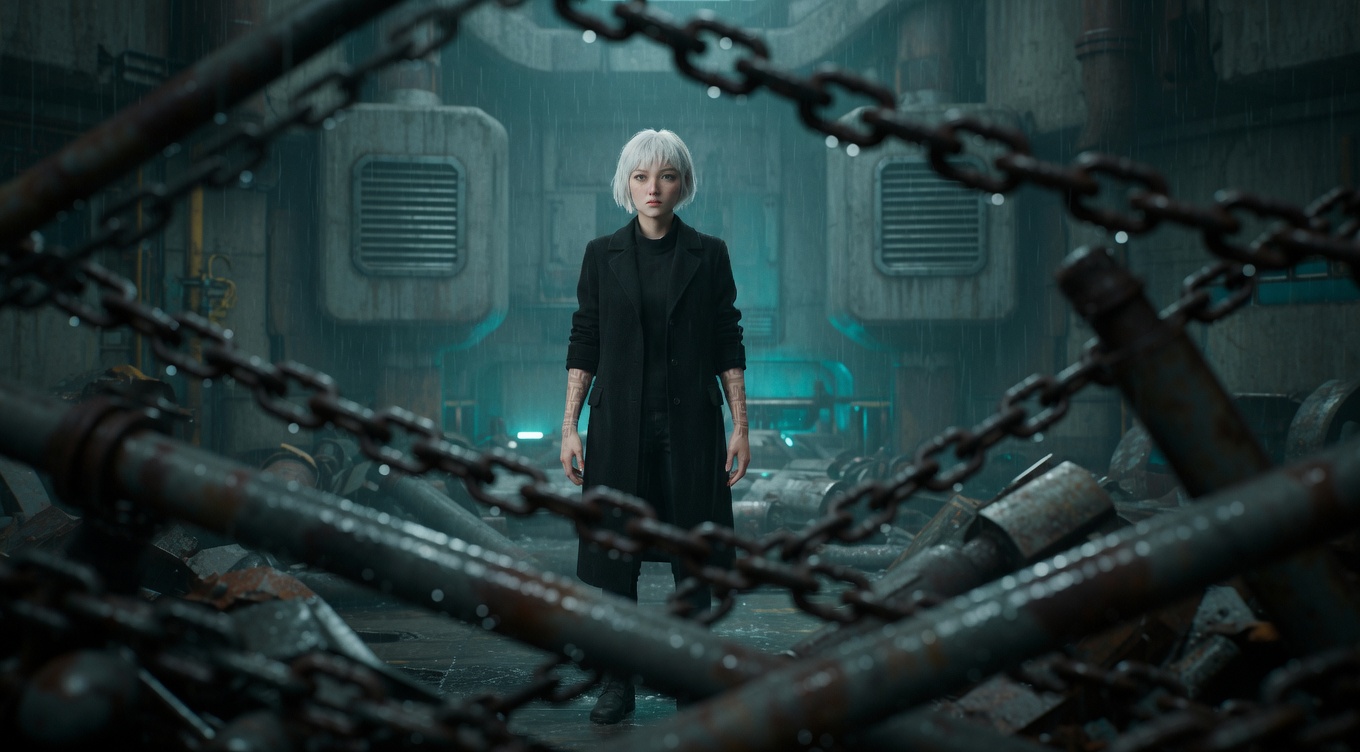
Foreground Interest cinematic example

Placing objects or elements in the immediate foreground to add depth and dimension, creating a layered image that draws the viewer through multiple planes of the composition. Steven Spielberg consistently uses foreground objects — a glass of water in "Jurassic Park," toys in "E.T." — to add depth and narrative context. Roger Deakins layers his compositions with foreground elements in "Skyfall" and "Blade Runner 2049" to create immersive three-dimensionality. Emmanuel Lubezki places branches, grass, and natural elements in the immediate foreground of nearly every exterior shot in Malick's films to create the feeling of being inside the environment rather than observing it.

By Ivan Flugelman · Reviewed 16 July 2026

Prompt template

Foreground interest composition with [Subject] in the mid-ground and blurred elements dominating the immediate foreground, three distinct depth planes creating immersive physical space, the foreground elements partially obscuring the subject adding voyeuristic tension, shot on a 40mm lens at T2 creating visible focus separation between planes, Kodak 5219 500T with desaturated earth tones, the Spielberg technique of putting the viewer inside the world

Replace [Subject] with your own character or scene. The prompt is technology-agnostic and works as a starting point for AI image or video generators.

When to use Foreground Interest

Foreground interest helps when a scene feels flat, observed from outside, or short on spatial tension. Use nearby branches, glass, furniture, props, architecture, or partial figures to place the viewer inside the environment. It can add context, concealment, scale, or a voyeuristic edge while guiding attention toward mid-ground action. The foreground object should belong to the location and support the scene; random blur at the frame edge is not enough.

Directing the AI

Place a large object very close to the camera, partially entering the frame, with the main subject in the middle ground and a readable background beyond. Decide whether the foreground stays soft, sharp, reflective, or silhouetted based on its role. Use overlap to establish depth without covering the subject's essential action. For video, let parallax separate the planes during camera movement; nearby elements should travel faster across frame than distant ones.

Common mistakes

  1. Adding anonymous blurred blobs at the corners, with no recognizable connection to the location or the scene's meaning.
  2. Covering the subject's face or action with foreground objects that create obstruction without tension, context, or reveal.
  3. Moving all depth planes at the same screen speed, eliminating the parallax that makes foreground layering physically convincing.
Sources and further reading

  1. Rules of Shot Composition in Film — StudioBinder
  2. Composition Techniques in Film — StudioBinder

A technique is one decision. A world is the system.

Framing is grammar. Distance, angle and lens each carry a fixed emotional consequence before a single texture is described.

Read Composition in full, free, or start with the thirteen fundamentals for building consistent characters, environments, visual logic, and stories that expand beyond one beautiful frame. There is also World Building Codex 3.0, free, and the World Building Academy.

Related techniques

Framing Within Frame

Using elements within the scene — doorways, windows, arches, branches — to create a secondary frame around the subject, adding depth, drawing focus, and suggesting entrapment or voyeurism. John Ford used doorway framing iconically in "The Searchers" — the final shot of John Wayne framed in a cabin door is one of cinema's most analyzed compositions. Hitchcock used frame-within-frame throughout "Rear Window" with the apartment windows functioning as individual movie screens. Wes Anderson frequently frames characters through windows, doors, and proscenium arches to create his dollhouse aesthetic, while Park Chan-wook uses frames-within-frames to suggest surveillance and control in "Oldboy."

Depth of Field

The range of distance in a scene that appears acceptably sharp — manipulating depth of field controls what the viewer focuses on and how they perceive spatial depth. The creative use of depth of field defines entirely different cinematic schools: Gregg Toland's infinite depth in "Citizen Kane" versus the paper-thin focus of Wong Kar-wai's films. Robert Richardson uses depth of field as an emotional instrument in Oliver Stone's "JFK" and Tarantino's "The Hateful Eight." Modern large-format sensors on cameras like the ARRI Alexa 65 have given cinematographers like Hoyte van Hoytema and Linus Sandgren even more control over focus separation.

Leading Lines

Using natural or architectural lines within the scene — roads, fences, corridors, shadows — to guide the viewer's eye toward the subject or deep into the frame. Kubrick's one-point-perspective corridors are pure leading-line compositions, while Vilmos Zsigmond used railroad tracks and highways as leading lines in "The Deer Hunter." Roger Deakins uses architectural lines in "Skyfall" — particularly in the Shanghai skyscraper sequence — to pull the eye through complex compositions. Christopher Doyle exploits the narrow corridors and alleyways of Hong Kong as natural leading lines in Wong Kar-wai's "In the Mood for Love."

Rule of Thirds

Dividing the frame into a 3x3 grid and placing key elements along the lines or at their intersections, creating naturally balanced, dynamic compositions that feel more alive than dead-center framing. While most directors use the rule instinctively, Roger Deakins and the Coen Brothers apply it with mathematical precision in films like "Fargo" and "No Country for Old Men." Emmanuel Lubezki frequently places subjects at the right-third intersection in Terrence Malick's films, leaving vast spaces of sky or landscape to fill the remaining two-thirds. The rule derives from classical painting composition and remains the most fundamental principle taught in both cinematography and photography.

Symmetry

A composition where both halves of the frame mirror each other, creating a sense of order, formality, perfection, or unsettling precision. Stanley Kubrick made symmetry his defining visual signature — the one-point-perspective corridor shots of "The Shining" and "A Clockwork Orange" remain the technique's most analyzed examples. Wes Anderson took symmetry to its whimsical extreme, making it the entire visual language of "The Grand Budapest Hotel" and "The French Dispatch." Denis Villeneuve uses cold, imposing symmetry in "Blade Runner 2049" and "Arrival" to convey alien or corporate power structures.

Negative Space

Leaving large areas of the frame empty, with the subject occupying a small portion, creating breathing room, isolation, contemplation, or emphasizing the weight of absence. Michelangelo Antonioni was the master of negative space in films like "L'Avventura" and "Red Desert," where vast empty landscapes and blank walls dwarf his characters. Sofia Coppola uses negative space in "Lost in Translation" to visualize loneliness in Tokyo hotel rooms. Robert Bresson's austere compositions feature deliberate emptiness, and Chloé Zhao's "Nomadland" places Frances McDormand as a small figure against enormous Western skies to communicate the vastness of both landscape and solitude.

Shallow Focus

Using a very narrow depth of field so only the subject is sharp while everything else melts into soft blur, isolating the subject and creating an intimate, dreamy quality. Wong Kar-wai and Christopher Doyle use extremely shallow focus in "In the Mood for Love" and "Chungking Express" to create their signature romantic, ephemeral atmosphere. Terrence Malick's work with Emmanuel Lubezki frequently employs razor-thin focus planes in natural light. The rise of large-sensor digital cameras and fast cine lenses has made shallow focus more accessible than ever, but master cinematographers like Hoyte van Hoytema control it with surgical precision in films like "Her" and "Dunkirk."

Deep Focus

Everything in the frame — foreground, middle ground, and background — is in sharp focus simultaneously, allowing the viewer to explore the entire image and discover relationships between planes. Orson Welles and Gregg Toland made deep focus the defining visual innovation of "Citizen Kane" (1941), composing shots where action in the foreground, middle ground, and background all demanded simultaneous attention. William Wyler used deep focus in "The Best Years of Our Lives" to create some of cinema's most layered compositions. Jean Renoir's deep-focus staging in "Rules of the Game" lets multiple storylines play out in a single frame. The technique gives audiences agency — André Bazin argued it was more democratic than montage.

Mise-en-Scène

The total arrangement of everything visible in the frame — set design, props, costumes, lighting, actor positioning — where every element is a deliberate storytelling choice. The concept originates from French theater and was elevated to an art form by directors like Max Ophüls in "The Earrings of Madame de..." and Jean Renoir in "The Rules of the Game." Kubrick's obsessive mise-en-scène in "2001" and "Eyes Wide Shut" treats every prop and color as narrative text. Wes Anderson's mise-en-scène is so controlled it becomes the primary vehicle of storytelling, while Bong Joon-ho's "Parasite" uses the physical layout of the house as a map of class structure.