← Cinematique Editing · Basic

Cutaway Prompt for AI Image & Video

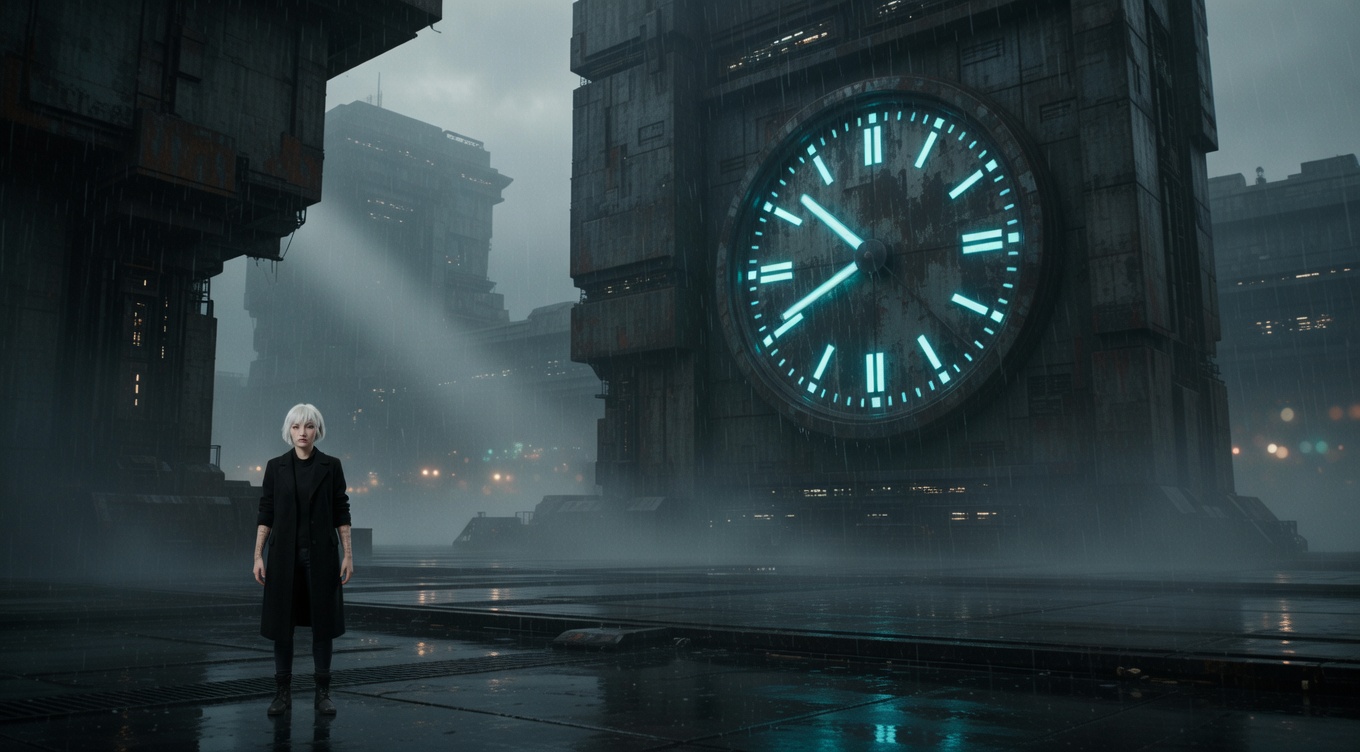
Cutaway cinematic example

A brief cut to something outside the main action — a clock on the wall, a nervous hand, a landscape outside — adding context, creating pacing, or building parallel meaning. Yasujiro Ozu's famous "pillow shots" are extended cutaways to empty spaces, clotheslines, and chimneys that provide contemplative breathing room between scenes in "Tokyo Story." Hitchcock uses cutaways to ticking bombs and dripping faucets to build suspense. The Coen Brothers cut away to environmental details — a wood chipper, a wind-blown tumbleweed — that become darkly comedic commentary. Terrence Malick's cutaways to nature are practically a genre unto themselves.

By Ivan Flugelman · Reviewed 16 July 2026

Prompt template

Cutaway to [Subject] isolated in tight framing, the mundane object suddenly loaded with meaning by its context, shot on a 100mm macro lens with the background softly blurred, warm tungsten light, the Hitchcock principle that showing the ticking clock is more suspenseful than showing the argument

Replace [Subject] with your own character or scene. The prompt is technology-agnostic and works as a starting point for AI image or video generators.

When to use Cutaway

Use a cutaway when the main action needs a breath, a clue, or a pressure point outside the immediate exchange. A clock can tighten suspense, an idle hand can expose anxiety, and an empty room can let emotion settle. It is especially useful between dialogue beats, during transitions, or whenever the environment should comment on the characters without speaking for them.

Directing the AI

First establish the main scene, then isolate one nearby object or environmental detail in tight framing. Keep its lighting, time of day, and production design consistent with the wider action. Reduce background information with shallow focus, but make the chosen detail unmistakable. Hold long enough for the audience to register its meaning, then return to the action. The cutaway should alter how the surrounding scene feels, not behave like decorative coverage.

Common mistakes

  1. Choosing a random object with no emotional, narrative, or rhythmic connection to the surrounding scene.
  2. Changing the light or setting so sharply that the cutaway feels borrowed from another sequence.
  3. Holding on the detail after its meaning is clear, draining tension instead of sharpening it.
Sources and further reading

  1. What Is Film Editing? — StudioBinder
  2. Types of Editing Transitions in Film — StudioBinder

A technique is one decision. A world is the system.

Generation is cheap and curation is expensive. A world is built as much by what you delete as by what you make.

Read Editing in full, free, or start with the thirteen fundamentals for building consistent characters, environments, visual logic, and stories that expand beyond one beautiful frame. There is also World Building Codex 3.0, free, and the World Building Academy.

Related techniques

Insert Shot

A close-up cut to a specific detail within a scene — a ticking clock, a letter, a weapon being drawn — directing audience attention to a crucial narrative element. Hitchcock was the supreme master of the insert shot, using close-ups of keys, glasses of milk, and scissors in films like "Dial M for Murder" and "Notorious" to build unbearable suspense from ordinary objects. Quentin Tarantino uses stylized insert shots of food, weapons, and car details as a rhythmic signature, while Edgar Wright employs rapid-fire inserts for comedic punctuation in "Shaun of the Dead" and "Hot Fuzz."

Reaction Shot

A cut to a character's facial response to an event, dialogue, or revelation — often more powerful than showing the action itself, as it lets the audience experience the emotional impact. Spielberg understands this deeply: in "Schindler's List," we often see Oskar Schindler's face reacting to horror rather than the horror itself, and the reaction is more devastating. Hitchcock said "the size of the close-up on a reaction shot should be directly proportional to the importance of the information." The Kuleshov Effect proves that the same neutral face takes on entirely different meanings based on what precedes it — making the reaction shot cinema's purest form of emotional manipulation.

Foreshadowing

Planting subtle hints of events to come — a cracked mirror, a line of dialogue, a color choice — details that seem innocuous on first viewing but become devastating on rewatch. Stanley Kubrick embedded foreshadowing details so densely in "The Shining" that the documentary "Room 237" is dedicated entirely to analyzing them. M. Night Shyamalan structures "The Sixth Sense" so that every scene contains foreshadowing of the twist ending. The Coen Brothers plant narrative seeds early — the wood chipper glimpsed in the first act of "Fargo" becomes the instrument of horror in the third. Denis Villeneuve's "Arrival" hides its entire twist in plain sight through carefully constructed visual foreshadowing.

Cross-Cutting

Alternating between two or more scenes happening simultaneously in different locations, building tension by implying convergence and creating dramatic parallels between storylines. D.W. Griffith pioneered cross-cutting in "Intolerance" (1916), intercutting between four historical periods. Christopher Nolan elevated cross-cutting to structural principle in "Inception" and "Dunkirk," weaving three timelines with different tempos. Francis Ford Coppola's baptism sequence in "The Godfather" — cross-cutting between the church ceremony and the simultaneous murders — remains one of cinema's most powerful uses of the technique.

Jump Cut

A cut between two sequential shots of the same subject from a similar angle, creating a jarring jump in time — once considered a mistake, now used intentionally for energy, anxiety, or time compression. Jean-Luc Godard made the jump cut famous in "Breathless" (1960), using it partly out of necessity to trim a too-long film and partly as a deliberate rejection of smooth Hollywood continuity. The technique became a signature of the French New Wave and has since been adopted by filmmakers from Guy Ritchie to Gus Van Sant. Darren Aronofsky uses rapid-fire jump cuts in "Requiem for a Dream" to convey the fragmented consciousness of addiction.

Dissolve

One image gradually fades out as the next fades in, both visible simultaneously during the transition, suggesting the passage of time, a dream state, or a thematic connection. Ingmar Bergman used dissolves as emotional bridges in "Wild Strawberries," where the overlap between present and memory becomes the film's central visual metaphor. Terrence Malick uses extended dissolves in "The Tree of Life" to blend cosmic and domestic imagery. Stanley Kubrick's dissolve from the star gate sequence to the neoclassical bedroom in "2001" is one of cinema's most disorienting transitions. Wong Kar-wai layers dissolves in "In the Mood for Love" to make time itself feel fluid and unreliable.

Fade In/Out

The image gradually appears from or disappears to black (or white) — fade to black signals an ending or major time passage while fade from black signals a new beginning or chapter. The Coen Brothers use long, slow fades to black as chapter markers in "No Country for Old Men," each fade feeling like a door closing permanently. Kubrick's fade to white at the end of "2001" suggests transcendence. Martin Scorsese uses the fade to black at the end of "Goodfellas" and "The Irishman" with devastating finality. The pace of the fade itself communicates meaning — a quick fade feels like a curtain dropping while a slow fade feels like consciousness dimming.

Montage

A sequence of short shots edited together to compress time, convey information, or build emotional momentum — from training sequences to falling-in-love sequences, montage is cinema's time machine. Sergei Eisenstein theorized montage as cinema's unique art form in the 1920s, and his Odessa Steps sequence in "Battleship Potemkin" remains the most studied montage in film history. Rocky Balboa's training montage set to "Gonna Fly Now" defined the modern montage for a generation. Martin Scorsese uses montage in "Goodfellas" to compress years of criminal excess into exhilarating minutes, and Edgar Wright creates kinetic comic montages in the Cornetto trilogy.

Smash Cut

An abrupt, jarring cut between two vastly different scenes — often from quiet to loud, calm to chaos, or a character saying "nothing could go wrong" to everything going wrong. Edgar Wright is the modern master of the smash cut, using it for comedic whiplash throughout "Shaun of the Dead" and "Hot Fuzz." Kubrick's smash cut from the bone to the satellite in "2001" is the most dramatic temporal smash cut in cinema. The Coen Brothers use smash cuts for dark comedy in "Fargo" and "No Country for Old Men," and David Lynch uses them in "Mulholland Drive" to shatter the viewer's sense of narrative stability.